
The room layout decides whether people join in
Theatre, cabaret, U-shape or boardroom — the layout governs how much talking happens. A practical overview with space per person.
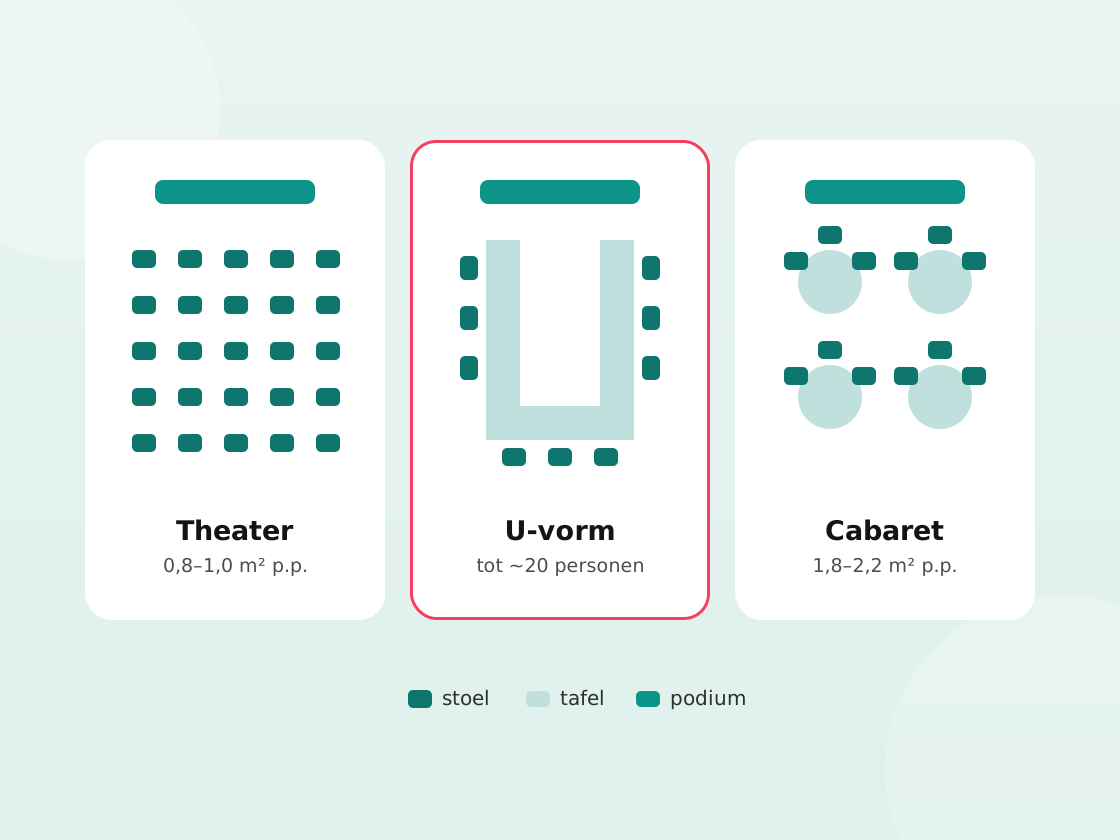
A client asks for a room for forty people with "an interactive programme", then picks a theatre layout because everyone fits. For the whole afternoon, forty people look at one speaker and at the back of each other's heads.
The layout isn't a logistical choice. It's the single biggest lever you have over whether people talk to each other.
What each layout does
Theatre — chairs in rows facing the stage. Maximum capacity, minimum interaction. Good for plenary presentations under an hour. Nobody can write anything down.
Cabaret — round tables with only the stage-facing seats used. The layout for programmes that alternate between presentation and discussion. Takes roughly twice the space per person that theatre does.
U-shape — tables in a U, speaker at the open end. Everyone can see everyone. Works up to about twenty people; beyond that the U gets so long that the ends start their own conversation.
Boardroom — a closed rectangle, no clear head. The layout for discussion between equals, not for someone who has come to present. Up to about twenty-four people.
Classroom — rows with tables. For anyone who has to write or use a laptop all day. Little interaction, a lot of space per person.
Space per person
| Layout | m² per person | Practical maximum |
|---|---|---|
| Theatre | 0.8–1.0 | Room size |
| Classroom | 1.5–2.0 | Room size |
| Cabaret | 1.8–2.2 | Room size |
| U-shape | 2.0–2.5 | ~20 people |
| Boardroom | 2.0–2.5 | ~24 people |
| Standing/reception | 0.6–0.8 | Room size |
Use the top of the range as soon as a buffet, a cloakroom or a technical table shares the space. The bottom applies to an empty room, and those are rare.
Changeovers take time
Theatre to cabaret for forty people is twenty to thirty minutes with two staff. That's fine during a lunch break and impossible in a fifteen-minute coffee break.
If there's a changeover in the programme, put it in the run sheet with a name and a time. A layout that "gets turned round over lunch" is the most common reason an afternoon programme starts a quarter of an hour late.
Read on
More articles
 In practice
Why one in five registrations never turns up
At free events only 70 to 80 percent of registrations typically show. What causes no-shows, and what genuinely reduces them.
 In practice
The run sheet your colleagues will actually read
Most run sheets are too long to use during an event. Here's how to write one that survives contact with the floor.
 In practice
Why you rebuild the same event every year
Most event teams run the same gathering twenty times a year and start from scratch each time. Here's what to set up once.
From request to invoice in one platform
Try MiceBird free for fourteen days. Your offering in it, your branding around it — no implementation project.