
How much staff do you actually need?
Plan too tight and you lose the evening, too generous and you lose the margin. Guidelines per event type, and where it usually goes wrong.
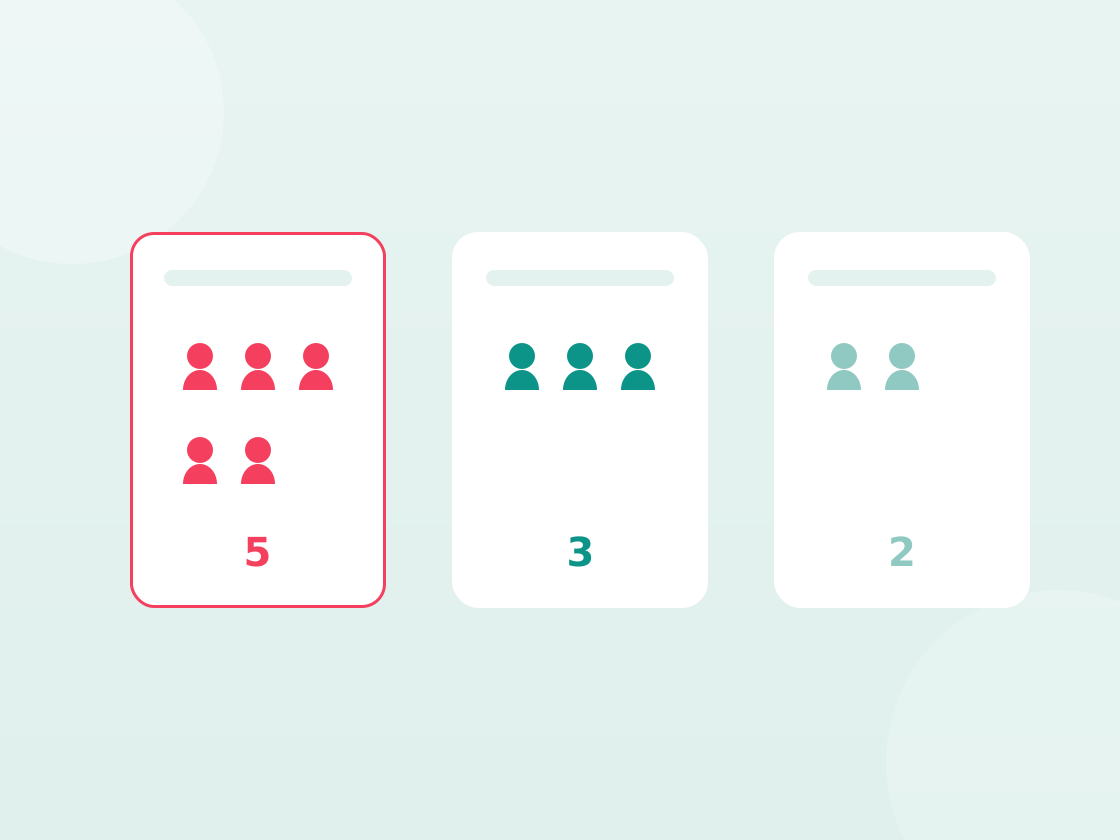
Staffing is the largest variable cost at most venues and the biggest factor in how an evening gets judged. One person short on the cloakroom and the first impression is a queue; one too many behind the bar and your margin evaporates.
Yet the roster is often set on instinct, and the planner's instinct is usually based on last time — including whatever went wrong then.
Guidelines to start from
These ratios are common in the industry. They're a starting point, not a law: your venue, your menu and your guest profile are each a reason to deviate.
| Function | Guideline |
|---|---|
| Plated dinner service | 1 staff per 15–20 guests |
| Buffet | 1 per 30–40 guests |
| Standing reception | 1 per 40–50 guests |
| Bar | 1 per 50–75 guests |
| Cloakroom | 1 per 100 guests, 2 at peak arrival |
| Wash-up | 1 per 60–80 covers |
The two that most often go wrong are at the bottom. Cloakroom and wash-up are invisible in the budget and painfully visible on the night.
Peak is not average
The classic error is staffing for the average. A three-hour reception for a hundred guests sounds like light work, but everyone arrives in the first forty minutes: coat, first drink, first canapé.
Roster that peak separately. Two extra people working only the first hour cost little and determine how the whole evening is remembered — because the queue at the door is the first thing a guest sees of your venue.
Count the changeovers
Reception to dinner, dinner to party: those transitions are the most labour-intensive moments of the evening and they're rarely in the plan.
A room changeover for a hundred people is two to three staff, twenty to thirty minutes. If that happens during the reception, those people aren't on the floor. So put the changeover in the run sheet with its own staffing, not as something that happens "in between".
Fixed people in the critical positions
Not every position is interchangeable. At most events three spots are where experience makes the difference: the person running the room, the person behind the bar at the busiest moment, and whoever is in contact with the client.
Put your permanent staff there and fill the rest with flexible workers. The reverse — an experienced hand on the cloakroom and an agency worker running the room — is the arrangement that derails evenings.
It also means you can't build a roster on numbers alone. Eight people of whom six are new is a different staffing level from eight who know each other, even though the figure is the same.
The quiet costs
Three things that fall structurally outside the budget and get paid for every time:
Set-up and breakdown. Two to four hours at an average event, often by people who have already worked a shift.
Briefing. Fifteen minutes before doors, with everyone. It's the cheapest defence against mistakes there is, and the first thing dropped when time is tight.
Overrun. A party that runs an hour late runs an hour and a half late for your staff. Agree in advance until when, and what it costs beyond that — a conversation you'd rather have at signature than at half past one in the morning.
Read on
More articles
 In practice
Why one in five registrations never turns up
At free events only 70 to 80 percent of registrations typically show. What causes no-shows, and what genuinely reduces them.
 In practice
The run sheet your colleagues will actually read
Most run sheets are too long to use during an event. Here's how to write one that survives contact with the floor.
 In practice
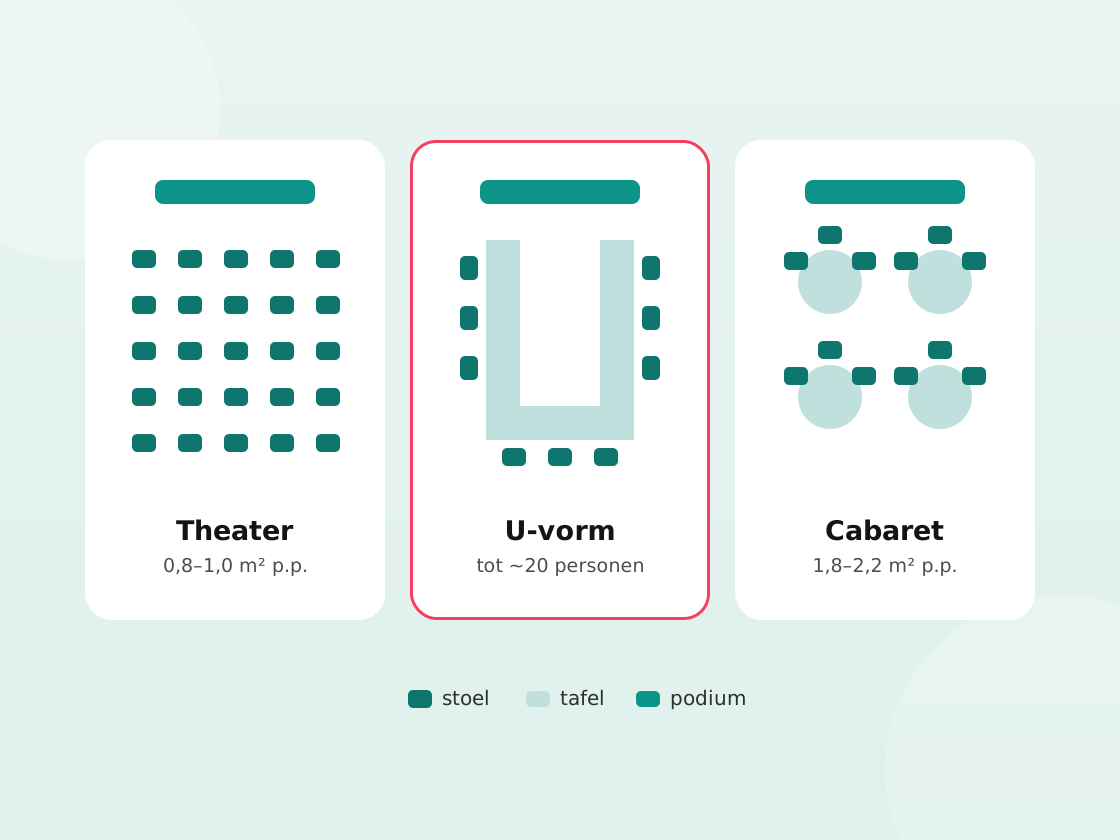
The room layout decides whether people join in
Theatre, cabaret, U-shape or boardroom — the layout governs how much talking happens. A practical overview with space per person.
From request to invoice in one platform
Try MiceBird free for fourteen days. Your offering in it, your branding around it — no implementation project.