
How long should you hold a date?
Provisional bookings block your calendar for events that often never happen. A workable term, and what to do when a second enquiry arrives.
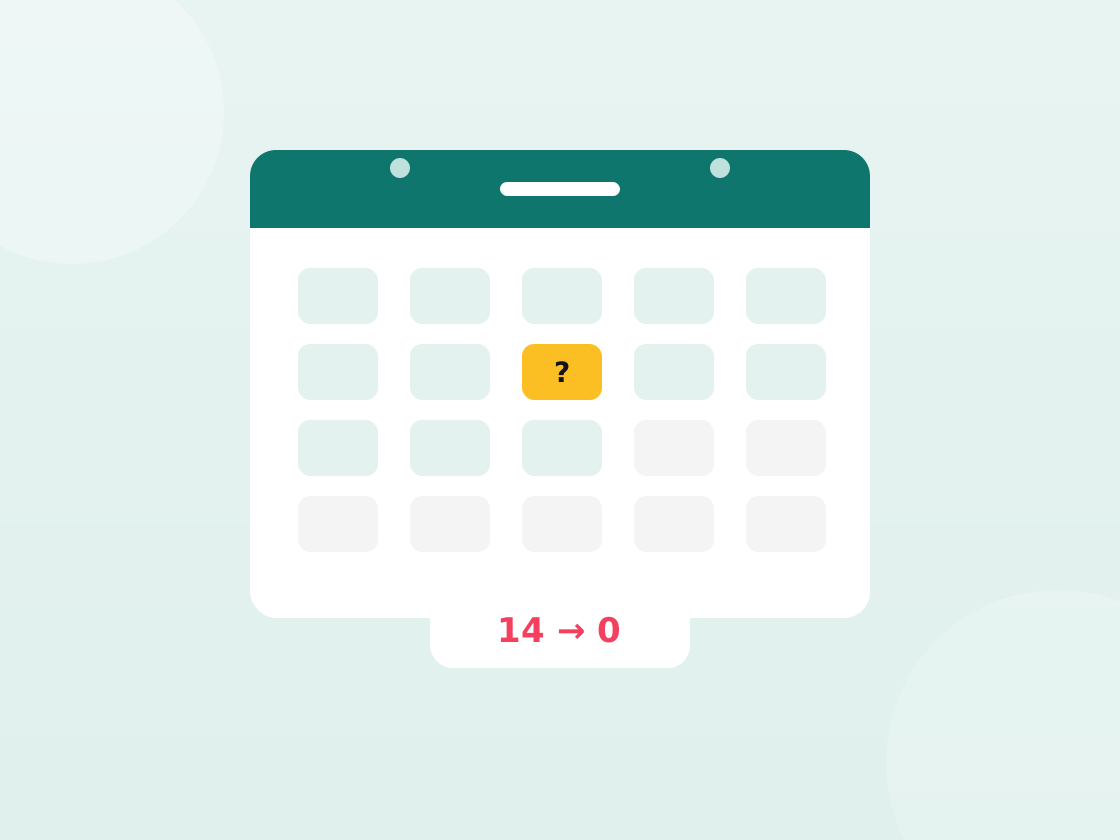
A client asks whether you can hold 14 November for them. You say yes, because it's a serious enquiry and you want to be helpful. Six weeks later the date is still marked provisional, you've turned down two other enquiries for that day, and the event isn't going ahead.
This is one of the most expensive habits in the industry, and it grows out of politeness.
Why an open-ended hold doesn't work
A provisional booking is a favour with no obligation. For the client it costs nothing: they keep an option open. For you it costs everything: you can't sell the date, and you don't know when that will change.
With no agreed end date, the incentive to decide disappears. Worse: the longer the hold runs, the greater the chance the event changes, gets postponed, or dies.
A term that works
This works for most venues:
- More than three months out: a fourteen-day hold
- Within three months: a seven-day hold
- Within a month: three days, or no hold at all
The logic is simple: the closer the date, the more valuable it is and the smaller your chance of reselling it. Name the end date explicitly in the same email that confirms the hold, with the day and date. "Two weeks" is vague; "until Tuesday 12 March" is an agreement.
What to do about a second enquiry
This is where it gets uncomfortable, and where most disputes start. The convention in the industry, which almost everyone considers fair:
When a second serious enquiry arrives for the same date, you call the holder and give them twenty-four to forty-eight hours to decide. If they sign, the date is theirs. If they don't, it goes to the second party.
This only works if you said so up front. Put it in the email confirming the hold, in one sentence: "If a second enquiry comes in for this date, we'll call you and you'll have 48 hours to decide."
Tell a hold apart from an interest
Not every request to hold a date is a hold. There's a large difference between "can you hold 14 November, we're finalising the budget" and "we're still looking around, but keep it in mind".
The second isn't a hold but an interest, and it shouldn't sit in your calendar as a block. Record it as an enquiry, not a reservation.
You can test the difference with one question: is there a date by which you expect to decide? Anyone without an answer is still looking — and then a two-week hold is a favour that helps nobody.
The hold that expires itself
The best kind of hold clears itself up. Put the end date in your system and set a reminder on it — for yourself, and ideally for the client too.
An automatic email on day twelve ("your hold on 14 November expires on Tuesday") does two things at once: it gives the client a last chance without you having to have the awkward conversation, and it makes sure your calendar corrects itself if nothing happens.
Read on
More articles
 In practice
Why one in five registrations never turns up
At free events only 70 to 80 percent of registrations typically show. What causes no-shows, and what genuinely reduces them.
 In practice
The run sheet your colleagues will actually read
Most run sheets are too long to use during an event. Here's how to write one that survives contact with the floor.
 In practice
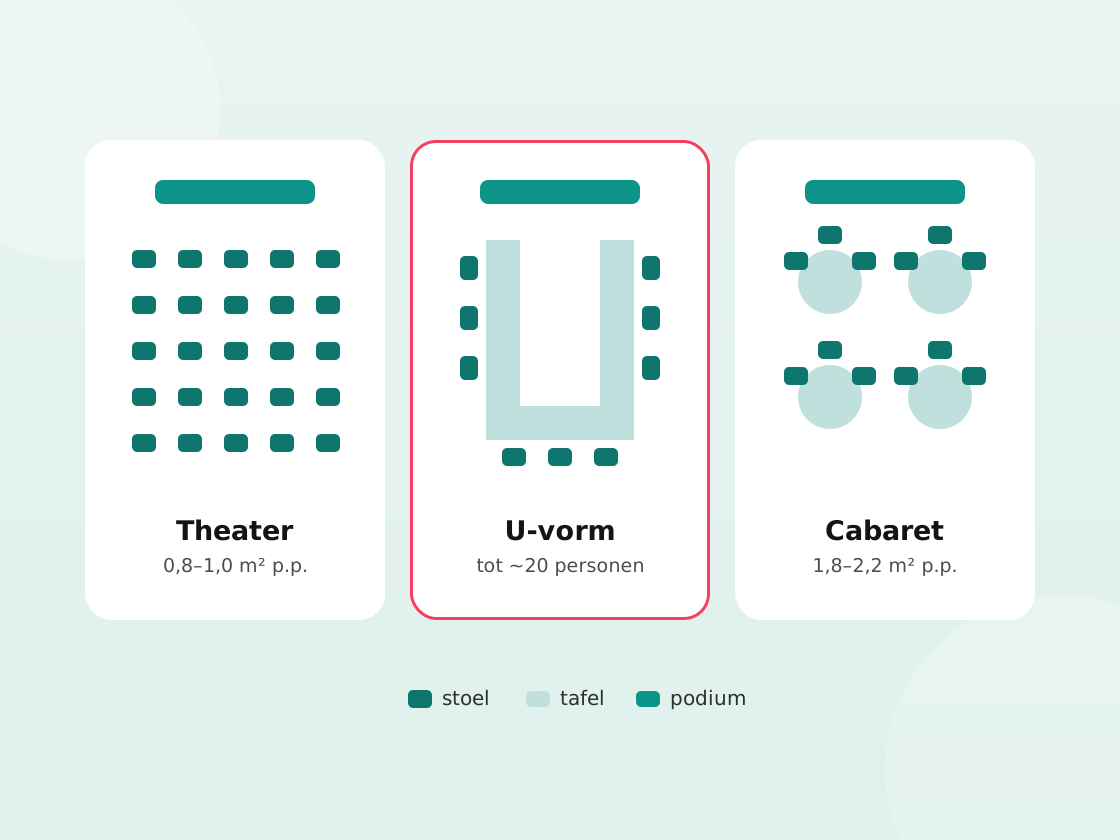
The room layout decides whether people join in
Theatre, cabaret, U-shape or boardroom — the layout governs how much talking happens. A practical overview with space per person.
From request to invoice in one platform
Try MiceBird free for fourteen days. Your offering in it, your branding around it — no implementation project.