
Who calls the caterer when it goes wrong?
An event often has five parties working at once. Without agreement on who decides what, every problem lands with you.
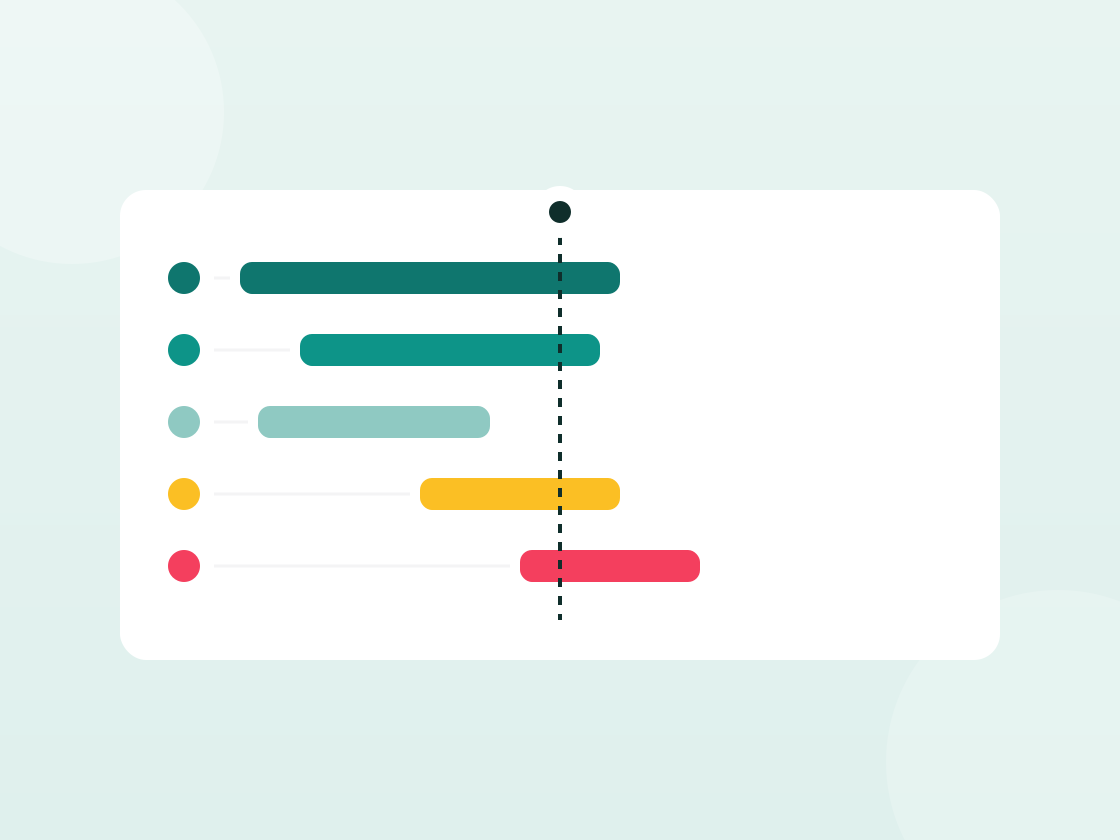
An average event has a venue, a caterer, a technical company, a photographer and sometimes a decorator. Five parties, five contacts, five schedules of their own.
On paper that works fine. In practice every question arising on the day runs through one person — and that's you, regardless of whether anyone agreed it.
Decide in advance who decides
The question isn't who the supplier is, but who decides when something changes. That's a different list and it's rarely made explicit.
| Situation | Who decides |
|---|---|
| Programme overruns by half an hour | Client, with the venue |
| Twenty more guests than notified | Venue calls caterer, client pays |
| Technical failure mid-presentation | Technical company, venue informs client |
| Outdoor element in rain | Client decides, by an agreed time |
That last point matters most: for a weather-dependent element you agree not only who decides, but when. "We'll see how it goes" means that at five o'clock nobody has decided anything while set-up should have started at four.
One shared run sheet, not five
Every supplier has their own schedule, and at detail level those schedules always contradict each other somewhere. The caterer expects a room empty by four; the technician is building until half past.
So put together one timeline that everyone gets, with all parties in it. Not as an email attachment, but as the version everyone looks at. The conflicts you then see — two parties needing the same space at the same time — are precisely the ones that otherwise surface on the day.
The hour before doors
Most problems arise not during the event but in the last hour before it: something wasn't delivered, someone is stuck in traffic, the room isn't ready.
So schedule a fixed moment, say ninety minutes before doors, when everyone gathers briefly. Five minutes, standing. What's ready, what isn't, who needs something.
That quarter of an hour costs nothing and moves problems from "during the event" to "before the event" — where they're still solvable.
Fix one contact per party
At larger suppliers you deal with an account manager at quote stage and with someone you've never met on the day. That's normal, and it goes wrong at one point: the agreements you made lived in the first person's head.
So ask every supplier two things: who is on site on the day, and has that person read the run sheet? The answer to the second is surprisingly often no.
A short email to that person two days ahead, containing only the lines that concern them, solves more than a complete run sheet nobody opens.
Agree who talks to the client
At an event with five suppliers, the client can be told five different things about the same delay. That's how an organiser ends up hearing that the sound is fine from the technician and that it isn't from the caterer's waiter.
So agree one thing: suppliers report to the venue, the venue reports to the client. Not because the client shouldn't know, but so that what they hear is consistent and comes from someone with the full picture.
It also protects your suppliers. A technician explaining a problem directly to a client will be asked to solve something that isn't theirs to solve, and the answer will be a promise nobody can keep.
Record what went wrong
Afterwards everyone is tired and everyone goes home. Yet that's the only moment when you know exactly what didn't run well.
Five lines in the run sheet, straight after. Next time you work with the same suppliers, you start there — and you'll be the only party who remembers what happened last time.
Read on
More articles
 In practice
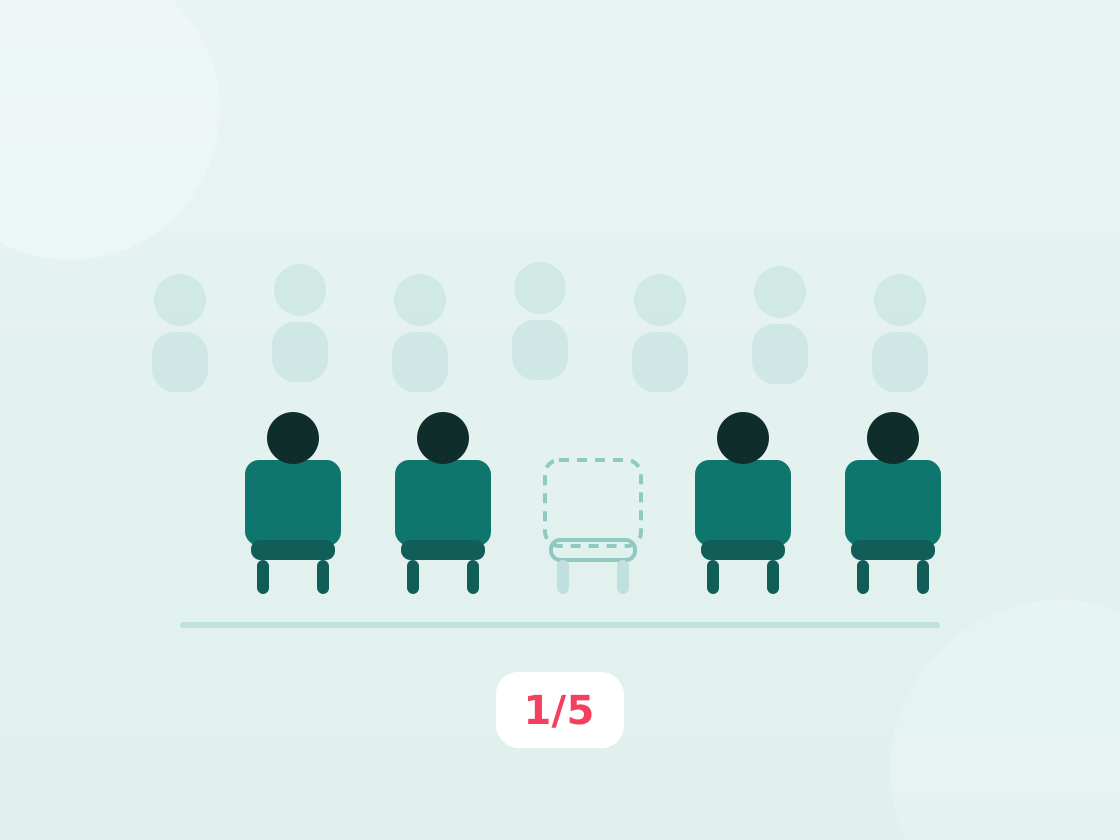
Why one in five registrations never turns up
At free events only 70 to 80 percent of registrations typically show. What causes no-shows, and what genuinely reduces them.
 In practice
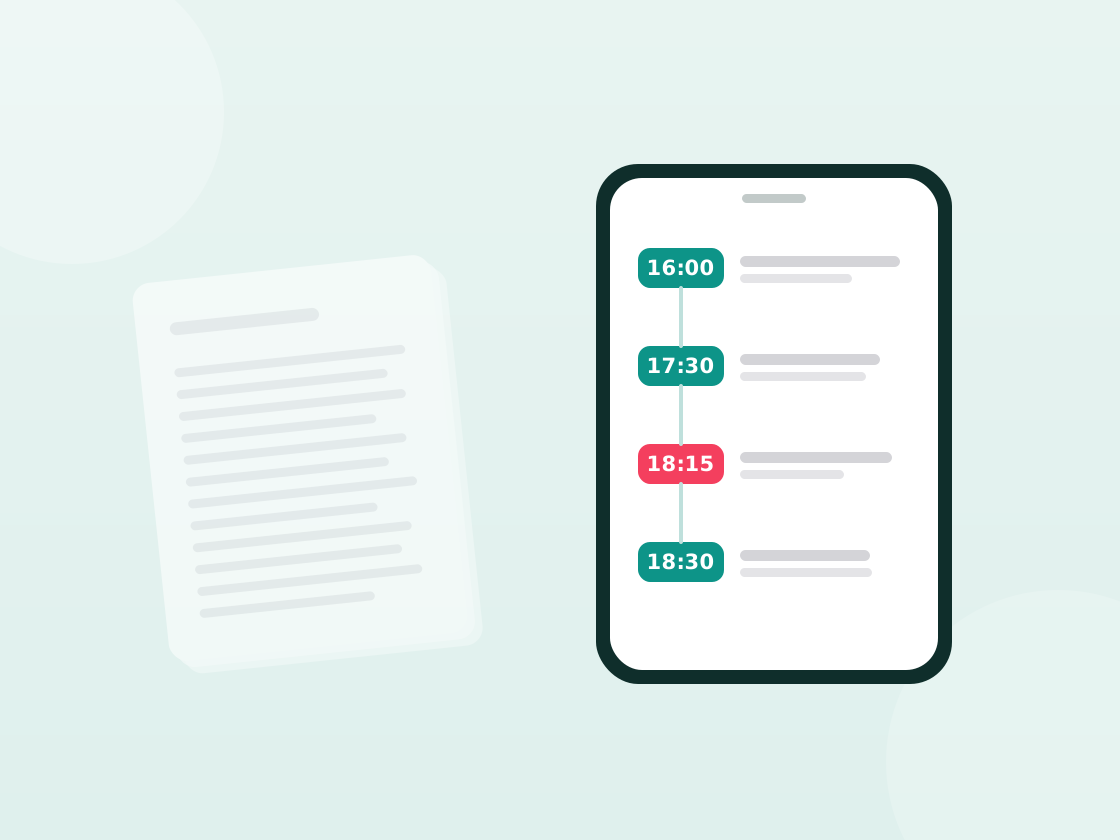
The run sheet your colleagues will actually read
Most run sheets are too long to use during an event. Here's how to write one that survives contact with the floor.
 In practice
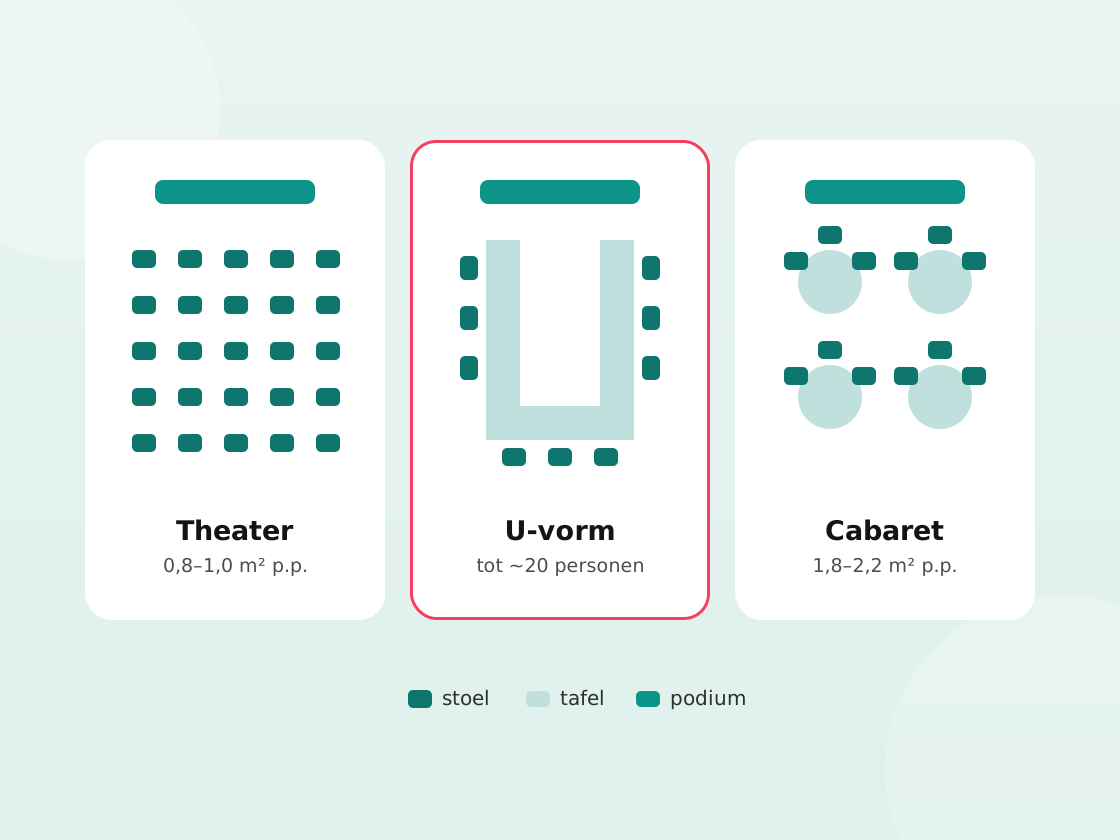
The room layout decides whether people join in
Theatre, cabaret, U-shape or boardroom — the layout governs how much talking happens. A practical overview with space per person.
From request to invoice in one platform
Try MiceBird free for fourteen days. Your offering in it, your branding around it — no implementation project.