
Do you know what your package really costs?
Many packages were priced years ago and only indexed since. How to build a cost price that holds up.
Ask a venue what the meeting package costs and you get the selling price. Ask what it costs the venue, and it goes quiet — or you get a figure someone worked out once and has raised by a few percent every year since.
That's how packages can sit below cost for years without anyone noticing. Revenue grows, margin doesn't.
What belongs in a cost price
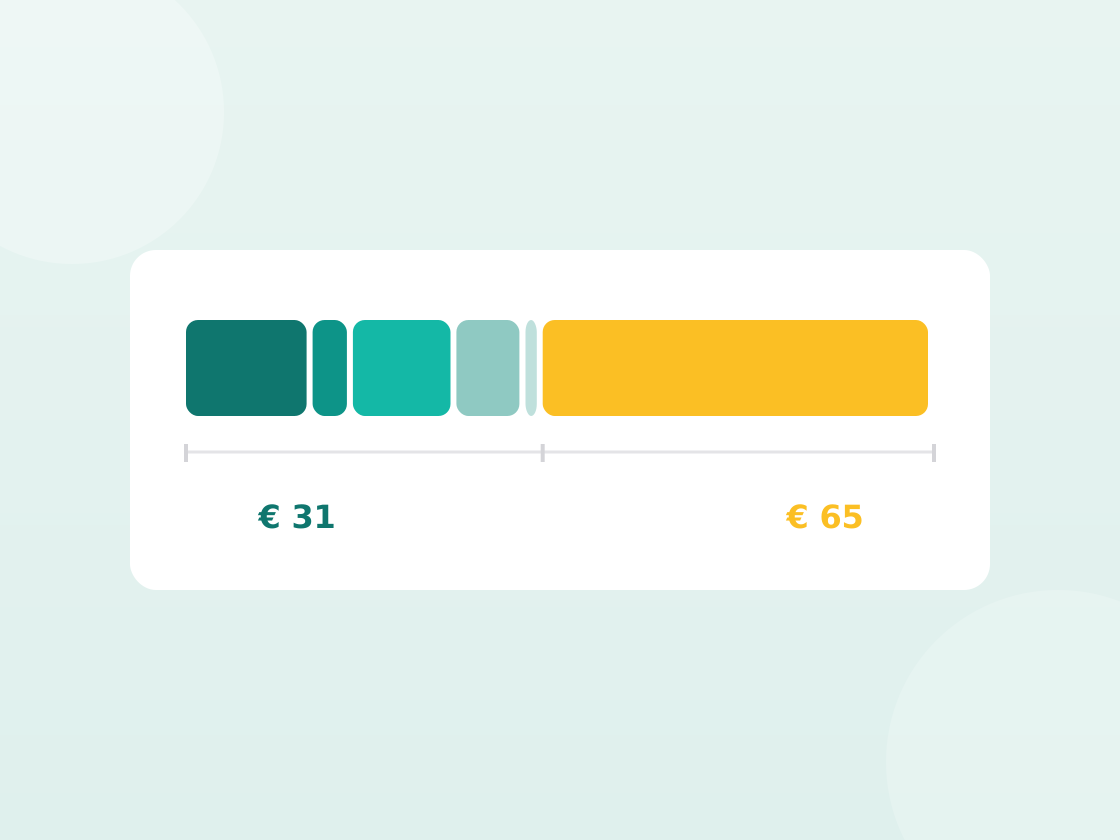
Take a day package at sixty-five euros a head: room, coffee and tea all day, lunch, and drinks afterwards.
| Line | Per person | Note |
|---|---|---|
| Food purchasing | € 11.00 | Lunch, snacks, coffee |
| Drinks purchasing | € 3.50 | Soft drinks during the day, reception |
| Direct staffing | € 9.00 | Service, kitchen, set-up |
| Room costs | € 6.00 | Energy, cleaning, depreciation |
| Consumables | € 1.50 | Linen, breakage, napkins |
| Direct costs | € 31.00 |
That looks like a thirty-four euro margin. But there's no overhead in there yet, no no-shows, no selling time and no payment risk. Count those and the real margin is considerably below half.
The lines everyone forgets
Selling time. Two to four hours per enquiry, most of it on enquiries that came to nothing. At thirty percent conversion, every booking carries the cost of two lost enquiries.
No-shows and shrinkage. You buy against the guaranteed number but often roster against the expected one. The difference is wages paid for guests who aren't there.
Set-up and breakdown. Rarely in the package, always incurred.
Payment terms. An invoice open for thirty-eight days while your suppliers want paying in fourteen is working capital you're fronting.
Calculate per half-day, not per event
A second blind spot: most venues calculate per event, while capacity is consumed per half-day. A meeting from nine to twelve and one from nine to five use the same room on the same day, but the second also blocks your afternoon.
Once you calculate per half-day, you see things that otherwise stay hidden. A group of eight occupying a room for thirty all day is rarely profitable — not because of the group, but because of the room you couldn't sell to anyone else. That's an argument for a minimum spend, not for a higher per-person price.
Test your price against three scenarios
If your cost price holds, you can use it to test decisions that otherwise run on instinct:
- The full room. At maximum occupancy, what do you keep per half-day?
- The half-full room. At fifty percent, do you still break even?
- The exception. The client asking for ten percent off — how much of your margin is that really?
The last is the most instructive. Ten percent of the selling price sounds modest, but on a thirty percent margin it's a third of what you keep. That's the difference between a concession and a loss, and without a cost price you can't see it.
Why this is more than bookkeeping
A cost price that holds changes how you sell. You know which packages you can give ground on to win a booking and which you should never discount. You know whether that group of twelve on a Tuesday is profitable or better referred elsewhere. And you know which component to adjust when a client wants to come in under your price.
Without that knowledge you negotiate in the dark. Then discounting always feels risky and so does holding firm — because you don't know which of the two you can afford.
Read on
More articles
 Invoicing
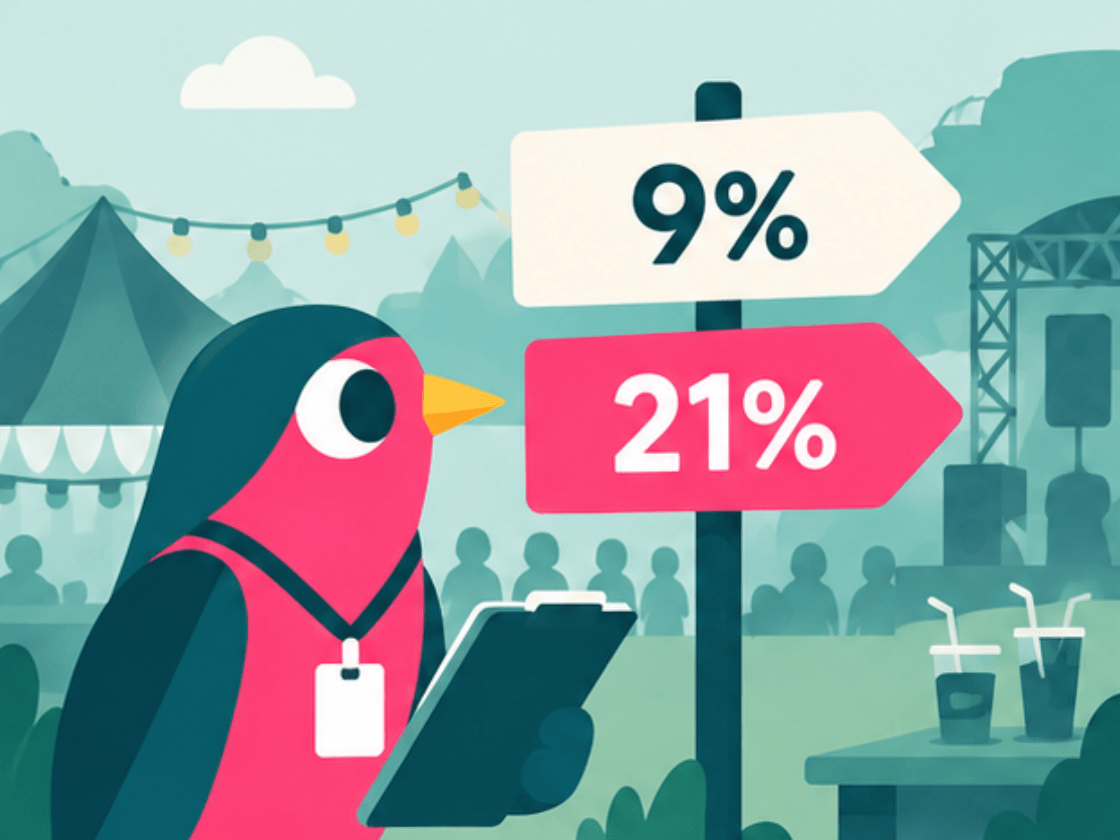
VAT on events: when 9% applies and when 21% does
Room hire, catering, admission and parking don't share a VAT rate. A practical overview for anyone drawing up quotes and invoices.
 Invoicing
Why your invoices get paid late
The average event invoice stays open for 38 days on a 14-day term. These are the causes, and none of them is that the client doesn't want to pay.
 Invoicing
Handling a cancellation without losing the client
The terms are on paper, but you still have to have the conversation. How to invoice what you're owed and keep the relationship.
From request to invoice in one platform
Try MiceBird free for fourteen days. Your offering in it, your branding around it — no implementation project.