
VAT on events: when 9% applies and when 21% does
Room hire, catering, admission and parking don't share a VAT rate. A practical overview for anyone drawing up quotes and invoices.
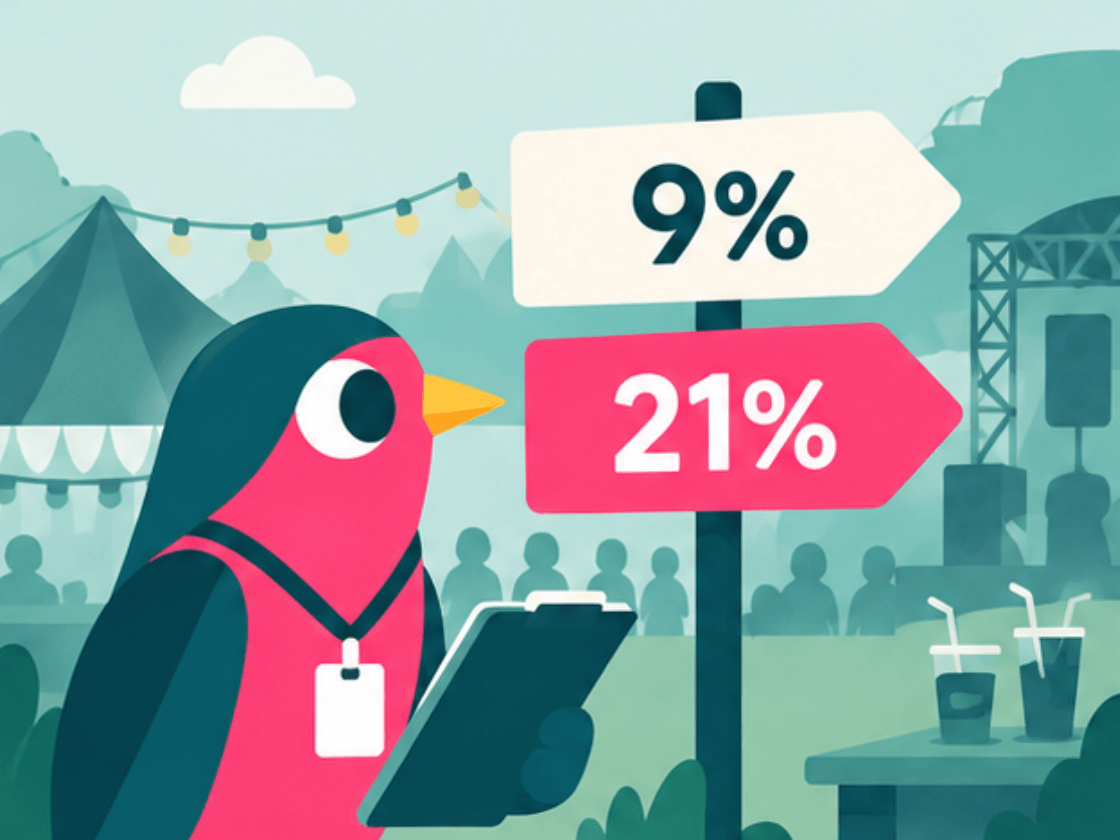
An event invoice rarely carries a single rate. Room hire, food, drink, admission and parking each follow their own rule, and the combination is where it goes wrong — usually only at year-end, when correcting costs more than getting it right would have.
This article is a practical overview, not tax advice. The Dutch rates below apply to events held in the Netherlands, and when in doubt your accountant is the one who looks at your specific situation.
The main rules
| What you supply | Rate | Watch out for |
|---|---|---|
| Food | 9% | Applies to the food itself, not the service around it |
| Alcoholic drinks | 21% | Always the high rate, even as part of a dinner |
| Soft drinks, coffee, tea | 9% | As a separate supply |
| Bare room hire | 21% | Letting a space is a service |
| Admission to an event | 9% or 21% | Depends on the type of event |
| Parking | 21% | Even at an event with 9% admission |
Where it goes wrong in practice
The all-in package. A €65-per-person meeting package covering the room, coffee, lunch and drinks contains at least three rates. Invoice it as one line at 21% and you remit too much. Invoice it at 9% and you'll get an assessment.
Drinks afterwards. At a dinner with 9% food and 21% drinks, the split between the two is what matters. Put them on the quote as separate lines and the invoice works out by itself — and the client also sees exactly what they're buying.
Admission. The low rate covers access to certain cultural and sporting events. A business conference or a private company party doesn't qualify.
Record it in your offering, not in your head
The practical fix is to stop deciding the rate per quote and set it once per product. Record the correct rate against every item in your offering — every room, every package, every drinks list. A quote assembled from those then totals up per rate on its own, and the invoice that follows is right without anyone checking it again.
It saves more than corrections. Mostly it saves the feeling of having to think through something you already worked out once, every time you invoice.
Read on
More articles
 Invoicing
Why your invoices get paid late
The average event invoice stays open for 38 days on a 14-day term. These are the causes, and none of them is that the client doesn't want to pay.
 Invoicing
Handling a cancellation without losing the client
The terms are on paper, but you still have to have the conversation. How to invoice what you're owed and keep the relationship.
 Invoicing
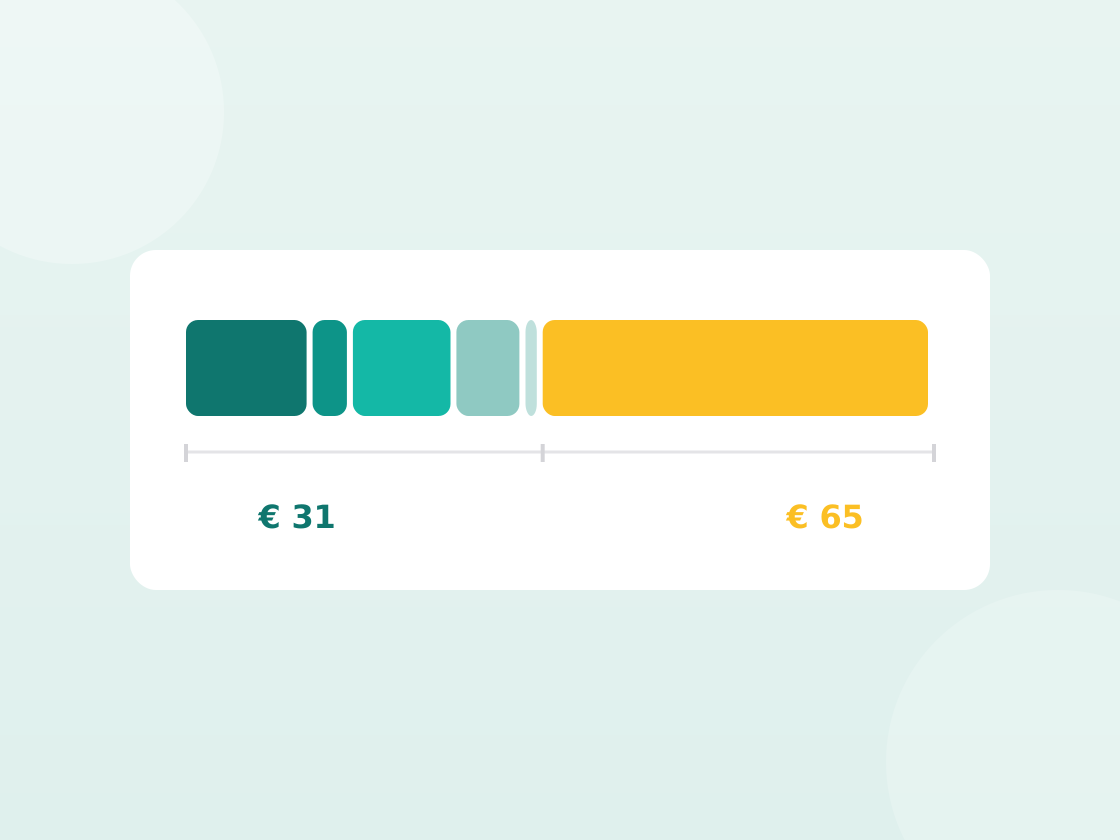
Do you know what your package really costs?
Many packages were priced years ago and only indexed since. How to build a cost price that holds up.
From request to invoice in one platform
Try MiceBird free for fourteen days. Your offering in it, your branding around it — no implementation project.