
Why your invoices get paid late
The average event invoice stays open for 38 days on a 14-day term. These are the causes, and none of them is that the client doesn't want to pay.
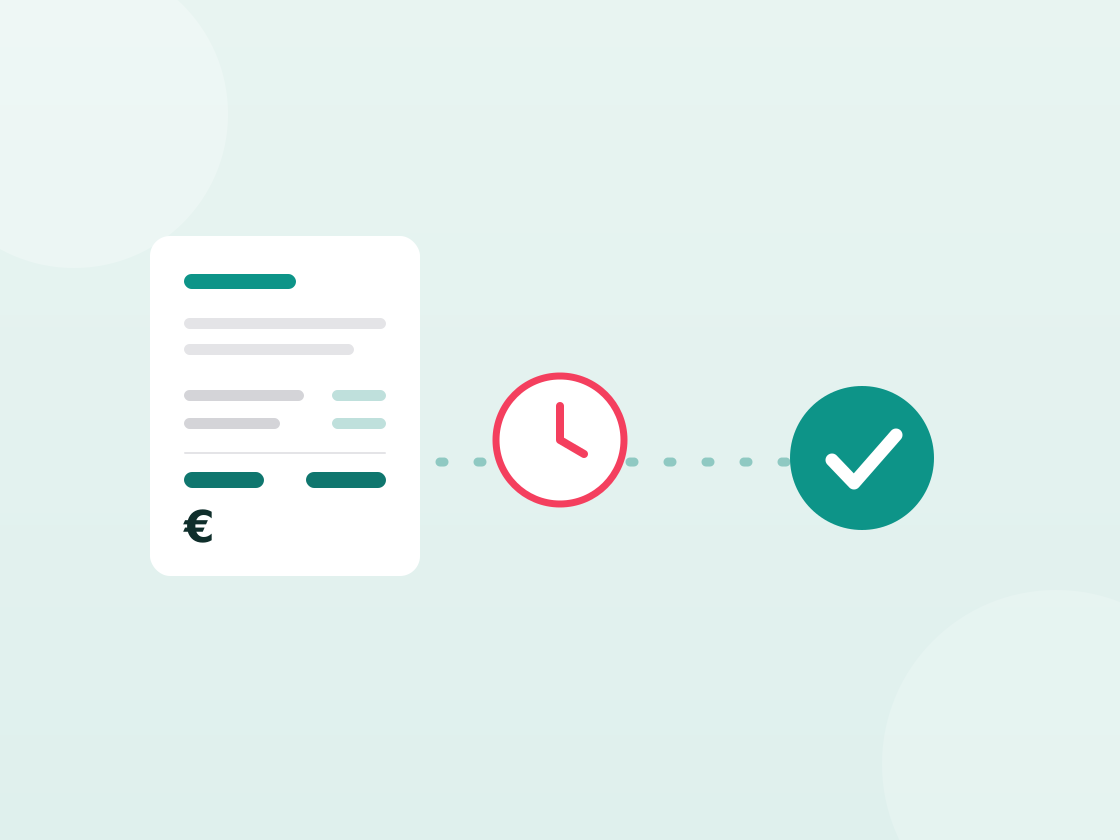
Your payment term is fourteen days. Your invoices get paid after thirty-eight on average. You called about it once and it was sorted immediately, which makes it all the more frustrating: the money was there, it was just sitting somewhere.
With business clients, late payment is almost never unwillingness. It's nearly always an invoice that got stuck somewhere in their process.
The five places it goes wrong
The invoice went to the wrong person. Your contact organised the party; the invoice needs to reach accounts payable or a central address. With your contact it sits for weeks until someone thinks of it.
A reference is missing. Many organisations won't process an invoice without a purchase order number or cost centre. It gets set aside, not queried.
The invoice arrived late. An invoice that turns up three weeks after the event lands in a new monthly cycle. You lose an entire round.
The amount differs from the quote. Any difference that isn't explained becomes an internal question. A question is a pile your invoice sits on until someone has time.
There's no payment link. Entering a transfer by hand is work. A link is a click. That difference is small per invoice and large across a year.
What to do about it
| Measure | What it solves |
|---|---|
| Ask for billing address and reference at signature | The two biggest blockers, before they exist |
| Invoice within 48 hours of the event | You catch the current payment round |
| Carry quote lines over to the invoice verbatim | No internal questions about differences |
| Payment link in the invoice email | Removes the manual step |
| Automatic reminder on day 15 | It works, and nobody has to feel awkward |
The first is the most important and costs nothing. At the moment someone signs, they're willing to tell you anything you need. Three weeks later you have to phone for it.
Late payment is a process problem
As long as you treat it as a client problem, the solution stays chasing. Once you treat it as a process problem, you see that most of the delay starts at moments you were present for: at signature, at invoicing, and in what the invoice says.
Read on
More articles
 Invoicing
VAT on events: when 9% applies and when 21% does
Room hire, catering, admission and parking don't share a VAT rate. A practical overview for anyone drawing up quotes and invoices.
 Invoicing
Handling a cancellation without losing the client
The terms are on paper, but you still have to have the conversation. How to invoice what you're owed and keep the relationship.
 Invoicing
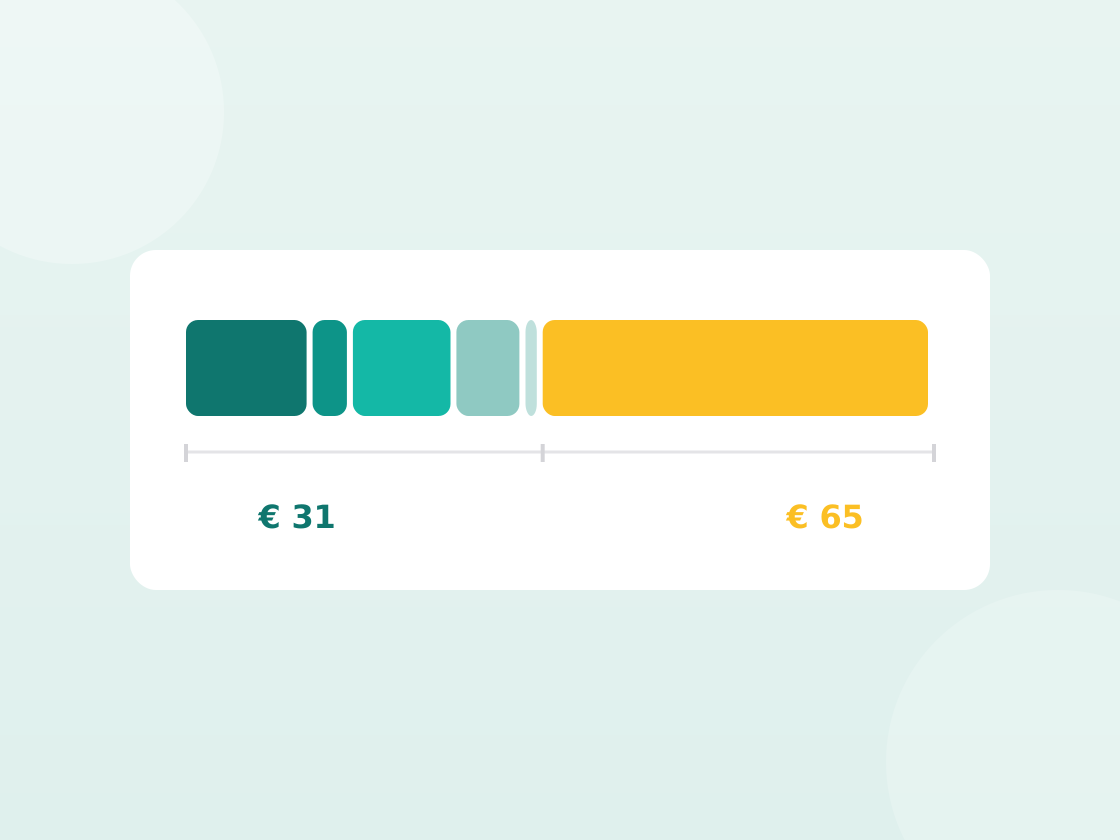
Do you know what your package really costs?
Many packages were priced years ago and only indexed since. How to build a cost price that holds up.
From request to invoice in one platform
Try MiceBird free for fourteen days. Your offering in it, your branding around it — no implementation project.