
Hybrid events are two events, not one and a half
Adding online attendees sounds like a small extension. In practice it needs its own programme, its own technical setup and its own staffing.
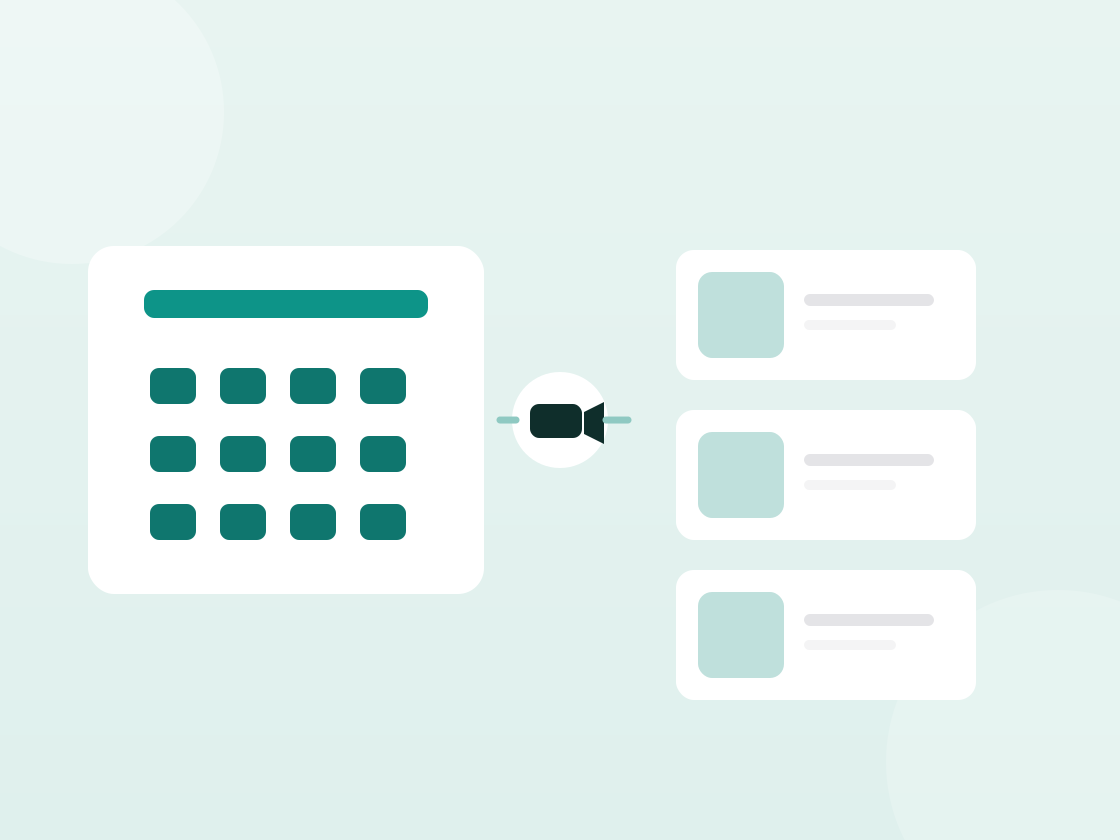
"We'll just put a camera in" is the sentence most disappointing hybrid events begin with. The result is predictable: online viewers see a room at an angle, can't hear questions from the floor, and drop off after twenty minutes.
That isn't a technical shortfall. It's what happens when one event is organised and two audiences are invited.
Why online is different
Someone in the room has invested: travel time, a day out of the diary, possibly a ticket. That investment carries their attention through a dull stretch.
Someone watching from home has a tab open. The competition is one click away, and the social pressure that works in a room — you don't walk out while someone is speaking — doesn't exist.
In practice that means shorter blocks, more changes of pace, and a reason to stay that gets renewed every ten minutes.
What you arrange separately, at minimum
A dedicated online host. Someone who introduces the stream, collects questions from the chat and bridges the breaks. Without that person, online watches an empty room the moment the room takes a break.
Sound from the PA, not from a camera. This is the single most important technical choice and the cheapest improvement available. Mediocre picture is forgiven; mediocre sound is not.
Questions from both channels. If only the room can ask questions, the online audience is an audience. Alternate explicitly: one from the floor, one from the chat.
Its own schedule. The break in the room is twenty-five minutes of coffee. For online that's twenty-five minutes of nothing. Fill it, or say honestly when you'll be back.
The budget is often wrong
Hybrid is sold as cheaper than two events, and it is. But it's clearly more expensive than one, and that difference is rarely budgeted properly.
| Line | What it typically takes |
|---|---|
| Camera and operator | Two cameras minimum for a conversation |
| Audio feed | A connection to the room's PA |
| Streaming platform | Depends on viewer numbers |
| Online host | A dedicated person, all day |
| Extra rehearsal | An hour beforehand, with everyone |
That last one gets skipped most often and causes the most problems. A setup first tested ten minutes before doors fails during the opening.
Decide up front what online does not get
A hybrid event gets worse when you try to give online everything the room gets. The networking drinks, the wandering, the conversation in the break: none of that streams, and attempts to simulate it always disappoint.
So be explicit about what online is and isn't. "You follow the plenary programme and can ask questions; the workshops and drinks are on site only" is an honest offer that leaves nobody disappointed.
That difference can sit in the price too. An online ticket at half the room price makes sense to both parties — and it makes clear these are two different products.
Survey them separately
Send online attendees a different survey from room attendees. They experienced a different event, and the questions that matter to them — was the picture good, could you ask questions, did you stay to the end — aren't on your standard form.
Without that split you get one average rating that says nothing about either group.
Read on
More articles
 In practice
Why one in five registrations never turns up
At free events only 70 to 80 percent of registrations typically show. What causes no-shows, and what genuinely reduces them.
 In practice
The run sheet your colleagues will actually read
Most run sheets are too long to use during an event. Here's how to write one that survives contact with the floor.
 In practice
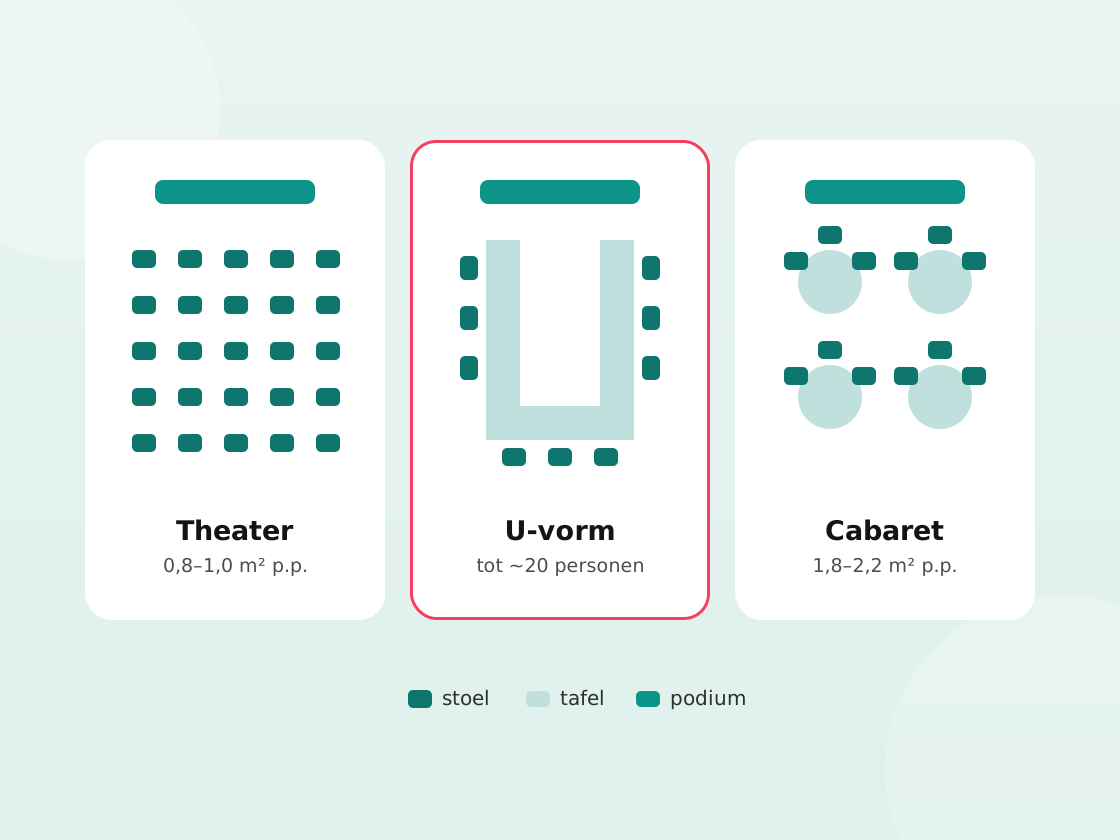
The room layout decides whether people join in
Theatre, cabaret, U-shape or boardroom — the layout governs how much talking happens. A practical overview with space per person.
From request to invoice in one platform
Try MiceBird free for fourteen days. Your offering in it, your branding around it — no implementation project.