
A survey people actually fill in
Most evaluations get under ten percent response and produce numbers you can't use. Five questions that do work.
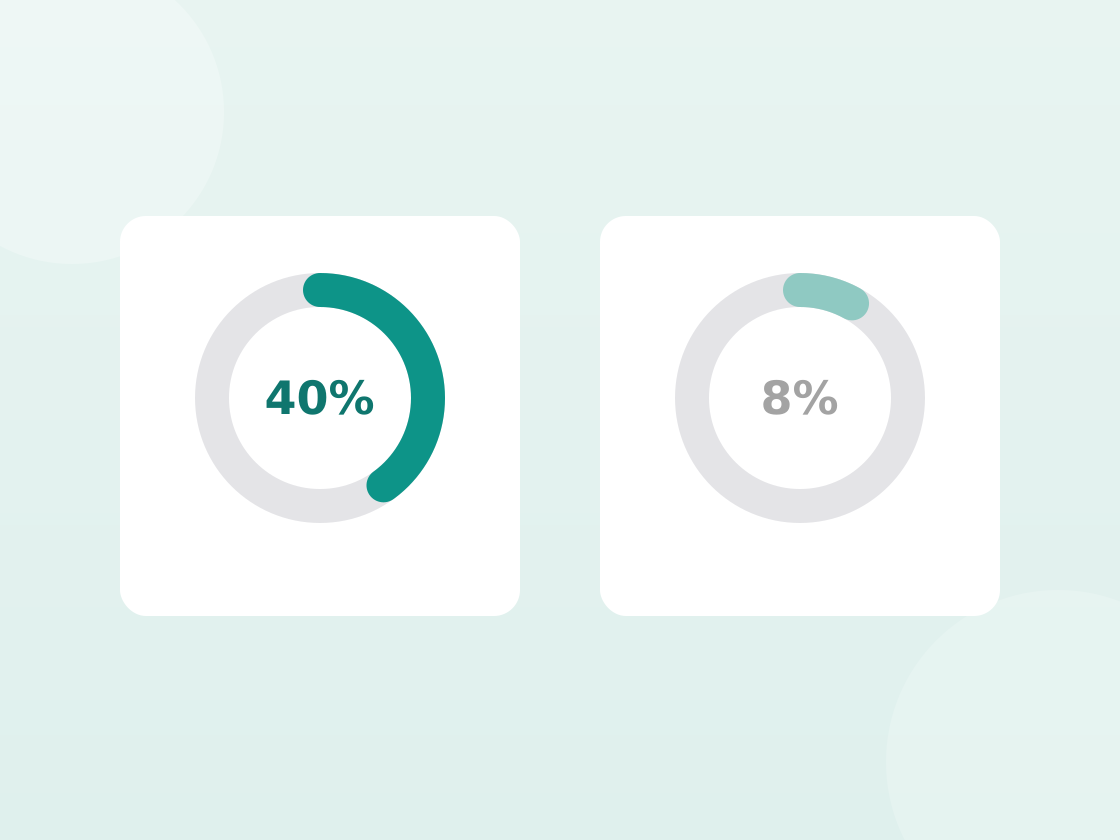
Two days after the event a survey goes out with fifteen questions. Eleven responses arrive from two hundred attendees, nine of them from people who loved it.
On that basis you conclude the event was a success. It might have been, but you don't know — because the eighty people who left halfway didn't fill in your form.
Why the response is low
It comes too late. Two days on, someone is already into the next week. The memory is vague and the motivation gone.
It's too long. Every question costs respondents. Past five, a large share drops out the moment the scrollbar appears.
It asks about things the respondent doesn't care about. Questions about room acoustics and signage are useful to you and uninteresting to them.
Nothing visibly came of it. Someone who filled it in last year and never saw a result won't bother this year.
Ask while they're still there
The highest response comes at the event itself, in the last ten minutes. A QR code on the screen, one question, done. Thirty to fifty percent is normal there, against five to ten percent for an email afterwards.
The drawback is that you only reach people who stayed to the end. Hence the combination: one question in the room, and a short email afterwards for everyone else.
Five questions are enough
- Would you recommend this event to a colleague? (0–10) — one number you can compare across years.
- What was the most valuable part? (open) — this is what to keep.
- What would you do differently next time? (open) — this is your improvement, often verbatim.
- How would you rate the venue and catering? (1–5) — the practical side.
- May we keep you posted about the next edition? (yes/no + email) — the only question that produces something you can act on directly.
Those two open questions yield more usable information than ten rating scales combined. Numbers tell you that something was off; the open answers tell you what.
Measure who didn't respond, too
A thirty percent response means seventy percent stayed silent, and that silence is rarely random. People who were delighted and people who were annoyed fill it in. People who found it average usually don't.
That means your average rating almost always comes out too high. Bear that in mind before concluding from an 8.4 that everything went well.
A practical correction: look not only at the score but at the share who responded at all. A 7.8 with forty percent response tells you more about your event than an 8.6 with eight percent.
Show what you did with it
The most powerful way to raise next year's response is to report back this year. One paragraph in the next announcement: "last year you asked for more time between sessions — this year the breaks are twenty minutes instead of ten."
That's the best possible evidence that responding is worth it, and it costs you one sentence.
Read on
More articles
 In practice
Why one in five registrations never turns up
At free events only 70 to 80 percent of registrations typically show. What causes no-shows, and what genuinely reduces them.
 In practice
The run sheet your colleagues will actually read
Most run sheets are too long to use during an event. Here's how to write one that survives contact with the floor.
 In practice
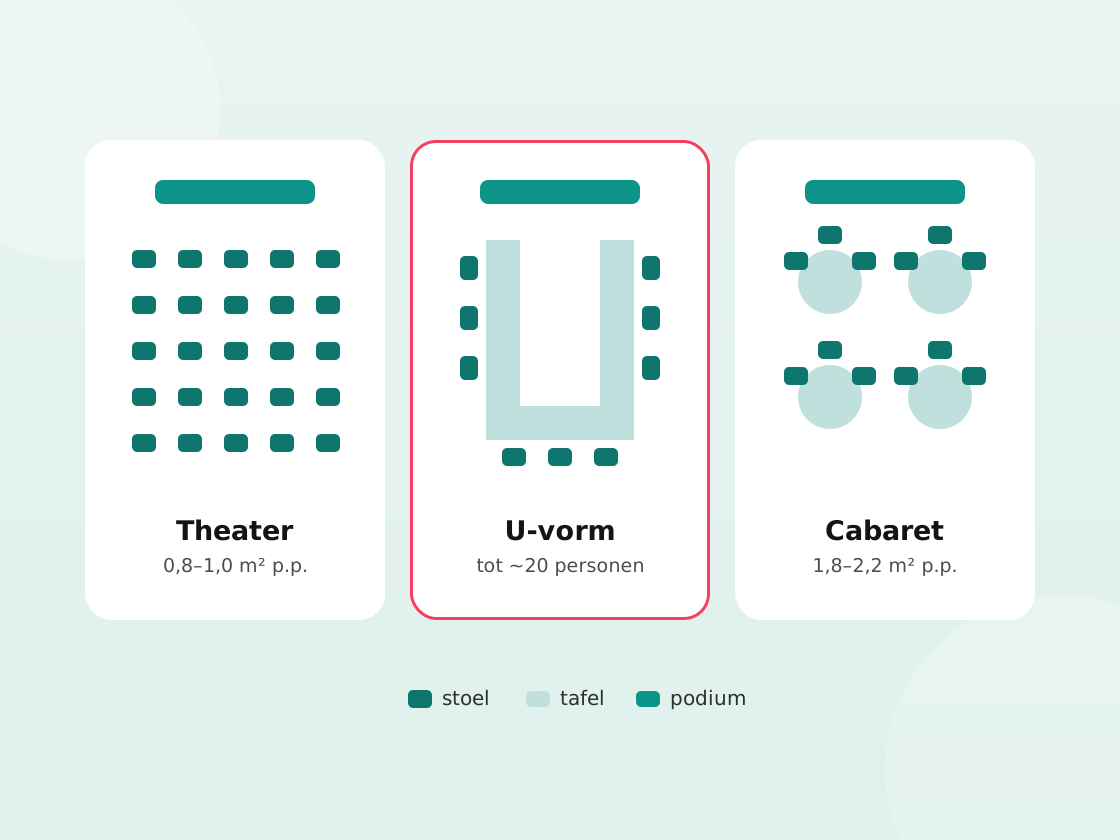
The room layout decides whether people join in
Theatre, cabaret, U-shape or boardroom — the layout governs how much talking happens. A practical overview with space per person.
From request to invoice in one platform
Try MiceBird free for fourteen days. Your offering in it, your branding around it — no implementation project.