
Sustainability your guests actually notice
Clients ask about it more and more. These are the measures that genuinely matter, and the ones that mostly just sound good.

Sustainability now appears in most enquiries from government bodies, educational institutions and larger companies. Often as an open question: "what are you doing about sustainability?"
For many venues the answer is a list that sounds better than it works. That's a shame, because a handful of measures do have real effect — and they're usually cheaper too.
Where the impact actually sits
At a typical event, most of the environmental load sits in two things: travel and food. Everything after that — waste, energy, materials — is together smaller than either of those alone.
That's worth knowing, because it means a venue going all-in on waste separation and paperless working is addressing the small lines while the large ones stay untouched.
Four measures that do work
Cut food waste. Events throw away a lot. More accurate numbers, smaller portions with top-ups rather than large servings, and an agreement about what happens to the surplus. This saves money at the same time — it's the only measure that pays for itself immediately.
Shift the ratio on the menu. Not fully vegetarian, but meat as one of the options rather than the default. A menu where the vegetarian option is the default and meat is on request changes the ratio considerably without denying anyone anything.
Make travelling easier. A venue five minutes from the station, decent bike parking, or simply a line in the invitation about the train connection. Travel is the biggest line and also the one you as a venue control least — but a clear travel instruction genuinely changes how people arrive.
Buy fewer single-use things. No printed banners with a year on them, no tote bags full of things nobody takes home. This is also where clients push hardest themselves.
What mostly just sounds good
A few things get mentioned often and do little: paperless meetings (negligible next to the menu), local sourcing as a criterion in itself (transport is a small part of food's footprint; what you eat weighs far more than where it came from), and carbon offsetting as a first measure rather than a last.
Offsetting isn't worthless, but it's the final step after everything you've genuinely reduced. If it's your first answer to what you're doing, a well-informed client will notice.
Let the client choose, with a default
The most effective mechanism costs nothing: change what happens when nobody chooses.
Most guests take whatever is put in front of them. If the standard lunch is vegetarian with meat on request, the majority eats vegetarian — not because they were persuaded, but because they didn't have a preference strong enough to act on.
The same applies to printed material, single-use items and giveaways. Make them opt-in rather than automatic, and the volume drops without anyone being told no. That's the difference between a measure people notice and resent, and one they never notice at all.
Only claim what you can back up
The most important rule is the dullest: don't claim anything you can't substantiate. A client who checks a claim and finds it thin won't trust the rest of your offering either.
Two measures you genuinely take, described in plain language, are worth more than a sustainability page full of ambitions.
Read on
More articles
 In practice
Why one in five registrations never turns up
At free events only 70 to 80 percent of registrations typically show. What causes no-shows, and what genuinely reduces them.
 In practice
The run sheet your colleagues will actually read
Most run sheets are too long to use during an event. Here's how to write one that survives contact with the floor.
 In practice
The room layout decides whether people join in
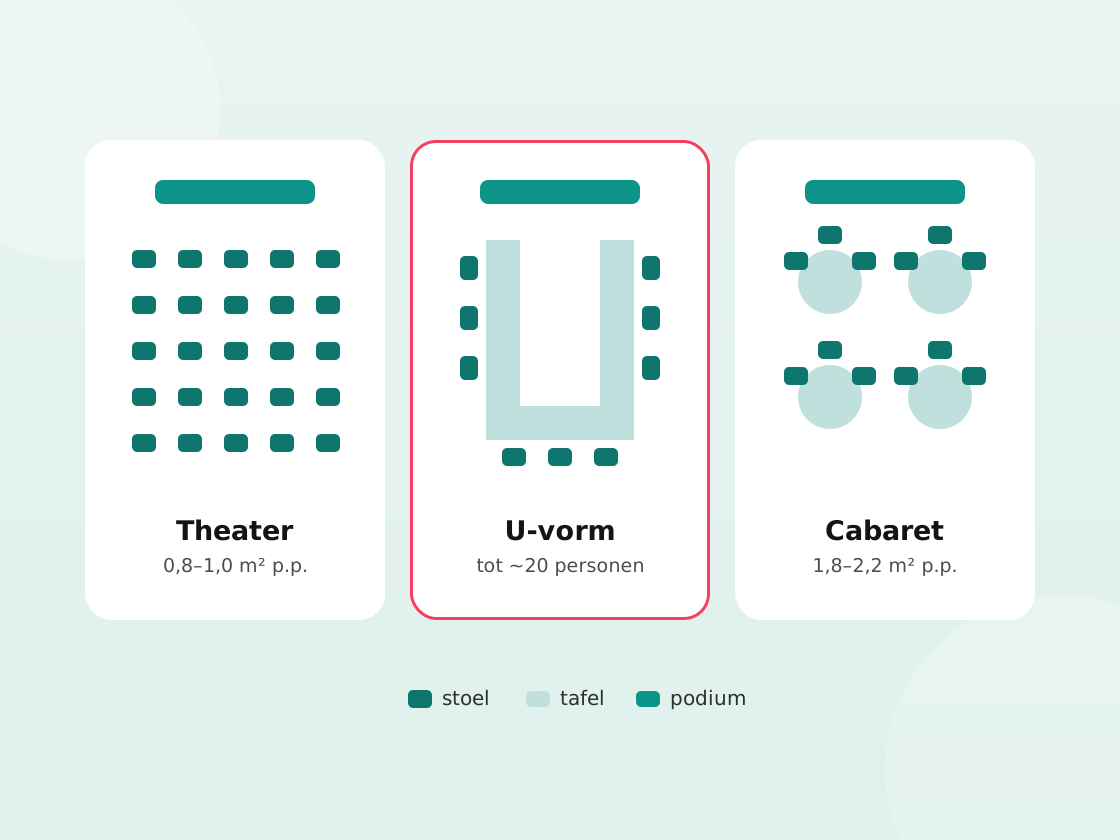
Theatre, cabaret, U-shape or boardroom — the layout governs how much talking happens. A practical overview with space per person.
From request to invoice in one platform
Try MiceBird free for fourteen days. Your offering in it, your branding around it — no implementation project.