
Why your catering numbers are always slightly wrong
Over-ordering costs margin, under-ordering costs reputation. How to arrive at a number that holds, and who carries the risk.
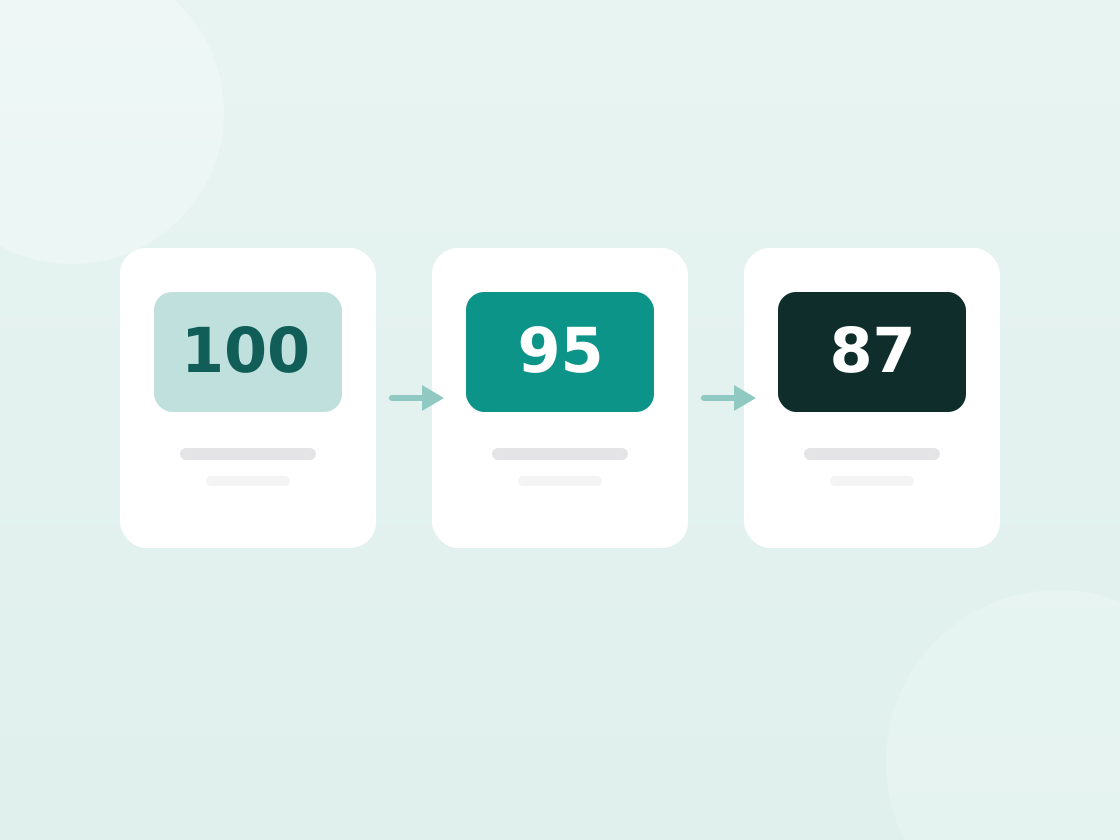
The client says a hundred. You buy for a hundred. Eighty-seven people turn up, and thirteen portions go unpaid for by anyone except you.
Or the reverse: a hundred and five arrive, the last ten get a smaller plate, and the evening ends with a client asking how this could happen.
Both problems come from the same source: the number you bought against was an estimate that nobody explicitly called an estimate.
Three numbers that get confused
Three different figures circulate in every event conversation, and most misunderstandings come from not keeping them apart.
The expected number is what the client thinks will come. It's in the enquiry and it's almost always optimistic.
The guaranteed number is what the client pays regardless, even if fewer turn up. This is the only figure that matters financially.
The actual number you only know on the night.
A quote that names only the first shifts the entire risk onto you without anyone having decided that.
Fix the guaranteed number
The industry standard is clear and rarely disputed when you state it in advance:
| Moment | What happens |
|---|---|
| At signature | Expected number recorded |
| 10 working days ahead | Number may drop by up to 10% |
| 5 working days ahead | Final number — this is the guarantee |
| After that | Up is usually fine, down is not |
Five working days isn't arbitrary: it's roughly what a kitchen needs to buy in without running into rush surcharges.
Registrations are not guests
At closed events — a staff party, a wedding — the number is reasonably predictable. At events with open registration it's an entirely different matter: rarely more than eighty percent of registrations turn up, and at free events often fewer.
If your client is basing their number on registrations, say out loud that this isn't the same as the number of guests. Many organisers don't know this, and they'll thank you for explaining it before it goes wrong rather than after.
Dietary requirements are part of the number
The number is one thing, the composition another. In a group of a hundred there are now easily fifteen to twenty special requirements: vegetarian, vegan, gluten-free, allergies, religious observance.
Getting those two days ahead is a problem; getting them with the final number is routine. So ask for them in the same request, not in a separate email later.
And agree what happens to requirements arriving after that. One extra vegetarian portion is nearly always manageable; a gluten-free menu for three on the morning itself usually isn't. Saying so in advance prevents the conversation where a guest has no food and nobody knows who was responsible.
What you do with the surplus
Every venue has leftovers. The difference is whether they're priced in.
Build a few percent of surplus into your package price — it's a real cost, like breakage and staffing. Venues that don't, price structurally too low and cover the gap out of margin without ever seeing it.
And agree what happens to the surplus. Staff eating, a food bank collecting, guests taking it home: anything beats throwing it away, and it's a conversation you have once and never again.
Read on
More articles
 In practice
Why one in five registrations never turns up
At free events only 70 to 80 percent of registrations typically show. What causes no-shows, and what genuinely reduces them.
 In practice
The run sheet your colleagues will actually read
Most run sheets are too long to use during an event. Here's how to write one that survives contact with the floor.
 In practice
The room layout decides whether people join in
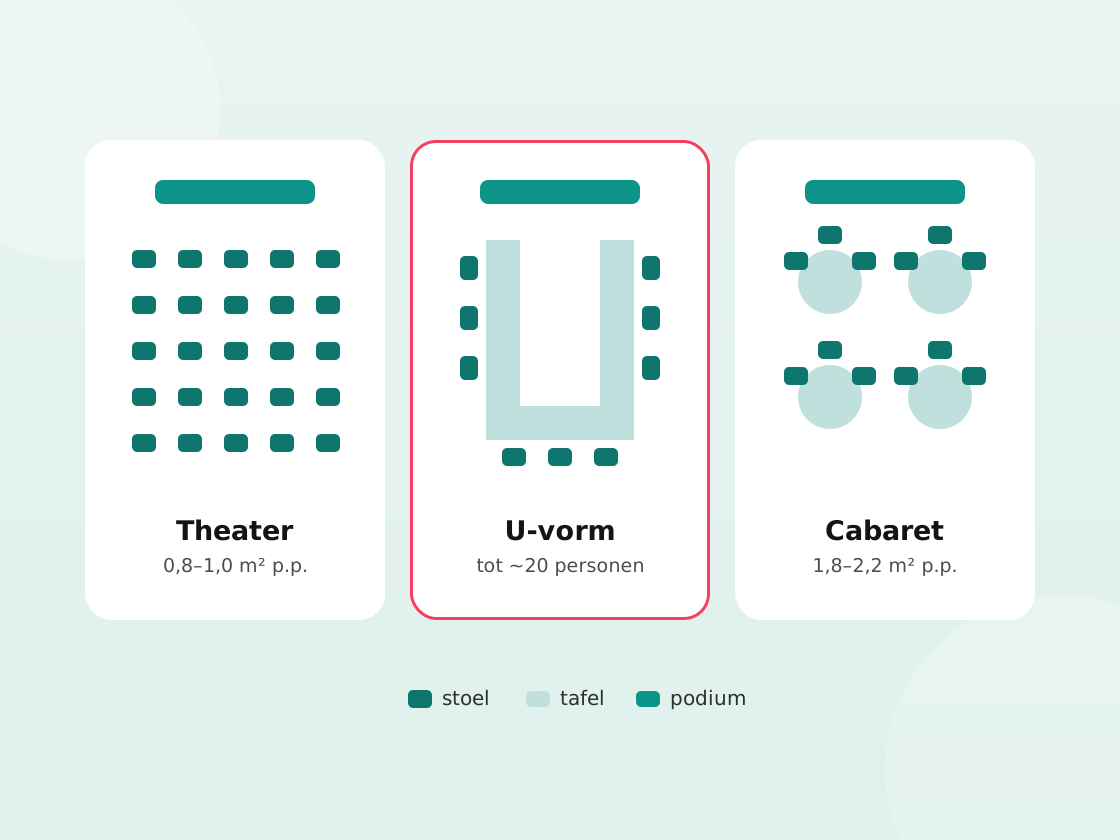
Theatre, cabaret, U-shape or boardroom — the layout governs how much talking happens. A practical overview with space per person.
From request to invoice in one platform
Try MiceBird free for fourteen days. Your offering in it, your branding around it — no implementation project.