
The check-in queue is a design problem
The first ten minutes decide how your event gets judged. Where queues come from and how to design them out.
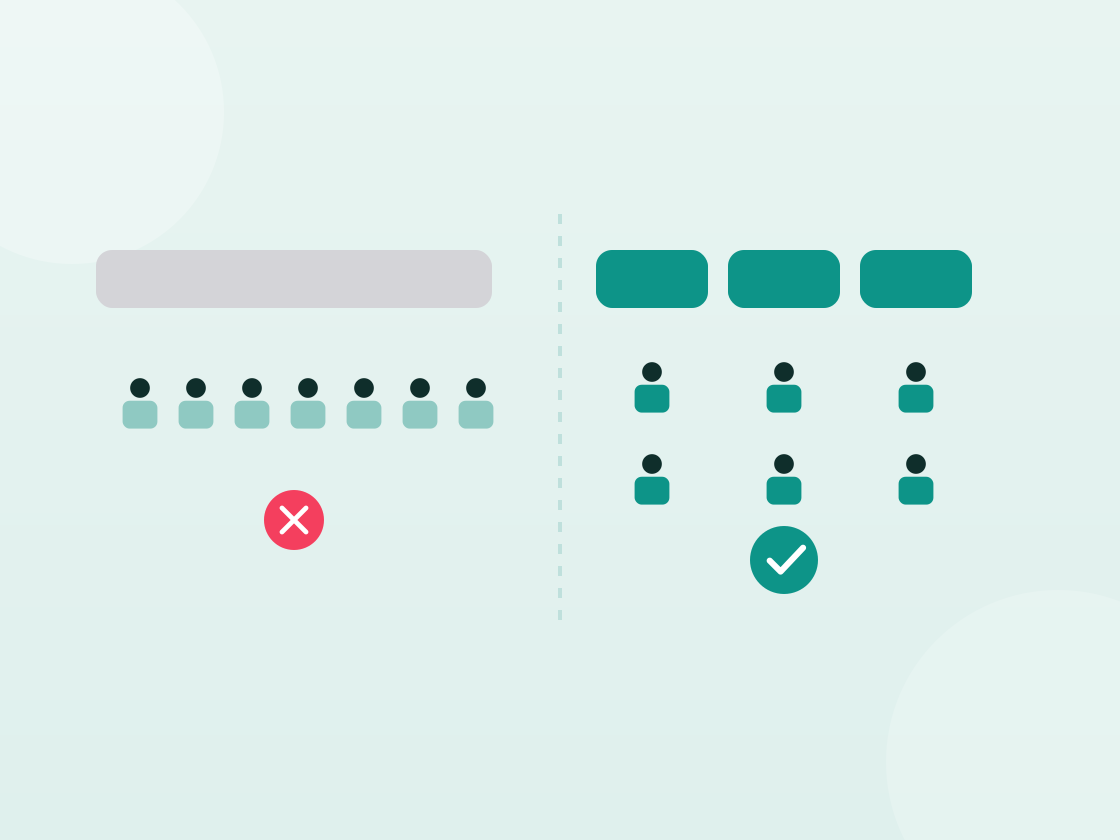
The programme starts at half past nine. At quarter past nine there's a queue out of the door, and the first impression of your event is a crowd waiting with coats over their arms.
That's rarely a staffing problem. It's almost always an arithmetic problem nobody did.
The sum nobody does
At an event with two hundred attendees starting at 9:30, most arrive between 9:00 and 9:15. That's roughly a hundred and forty people in fifteen minutes.
If checking in one person takes thirty seconds, one desk handles thirty per quarter hour. So you need nearly five to clear that peak — not two, which is the usual staffing.
Thirty seconds sounds like very little. Find the name, find the badge, hand it over, answer a question: it's on the optimistic side.
Three ways to make it shorter
Don't sort badges alphabetically on one table. Split them into letter blocks across several desks, with a sign above each. People then sort themselves before they arrive, and nobody is searching the same tray.
Use a QR code in the confirmation email. Scanning takes five seconds instead of thirty. Most of the saving isn't the scan itself but the searching that disappears.
Let people take their own badge. At events where attendees know each other, a table of badges laid out alphabetically with one person helping beats three people handing them out.
The real delay isn't at check-in
Watch a queue and see where people stop after getting their badge. Usually not at the desk, but ten metres further on: at the cloakroom, at the coffee, or at the programme board.
That congestion pushes back into the check-in queue. More desks won't fix it. What does: putting the cloakroom before check-in, moving coffee well out of the walking route, and making sure there's somewhere to go once past the desk.
Plan for the latecomers
Every check-in is designed for the peak, and the tail gets forgotten: the people arriving half an hour after the start because their train was delayed.
With no provision they walk into the room while the first speaker is going, hunt for their badge on an abandoned table, and interrupt at exactly the wrong moment.
So keep one staffed position until half an hour past the start, and lay the remaining badges out alphabetically on a table by the entrance. That's fifteen minutes of extra staffing and it saves you the disruption that otherwise runs through the whole opening.
What pre-check-in gets you
If attendees confirm their details in advance — and get their badge digitally — the desk becomes a checkpoint rather than a processing point.
That changes the whole morning. The peak is no longer a problem but a flow, and your staff can do what they're there for: welcoming people instead of working through a list.
Read on
More articles
 In practice
Why one in five registrations never turns up
At free events only 70 to 80 percent of registrations typically show. What causes no-shows, and what genuinely reduces them.
 In practice
The run sheet your colleagues will actually read
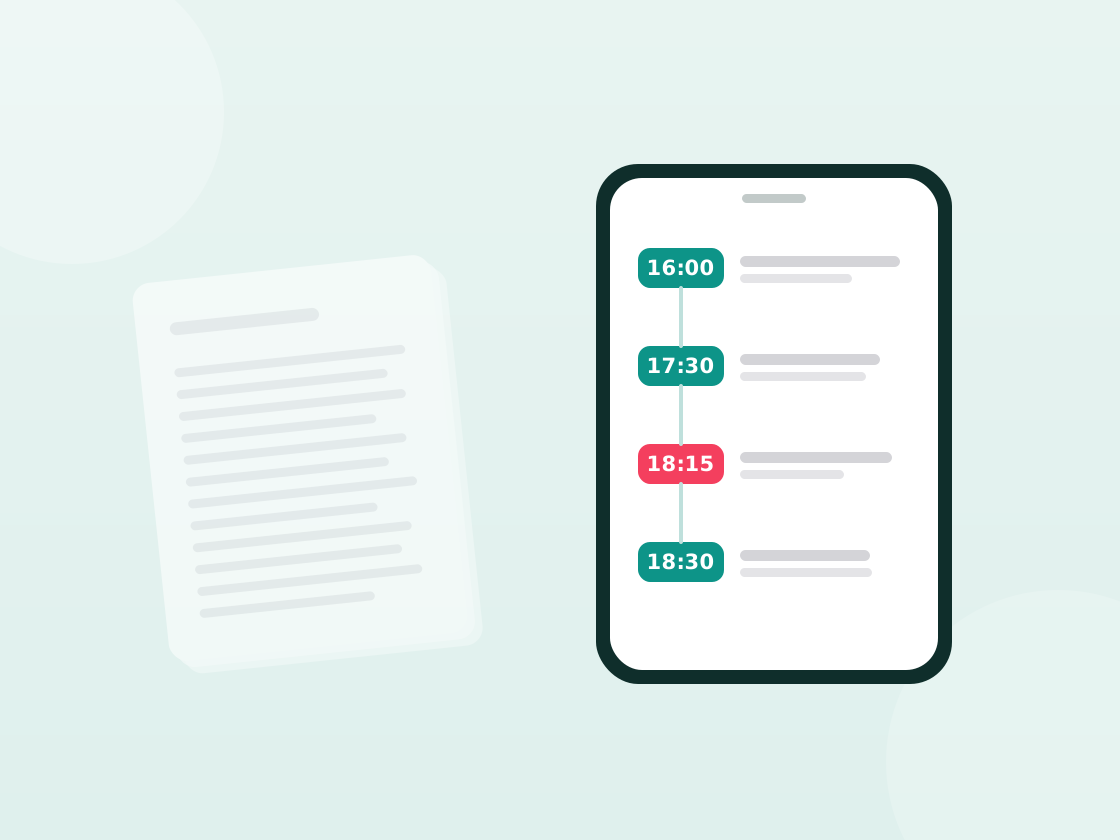
Most run sheets are too long to use during an event. Here's how to write one that survives contact with the floor.
 In practice
The room layout decides whether people join in
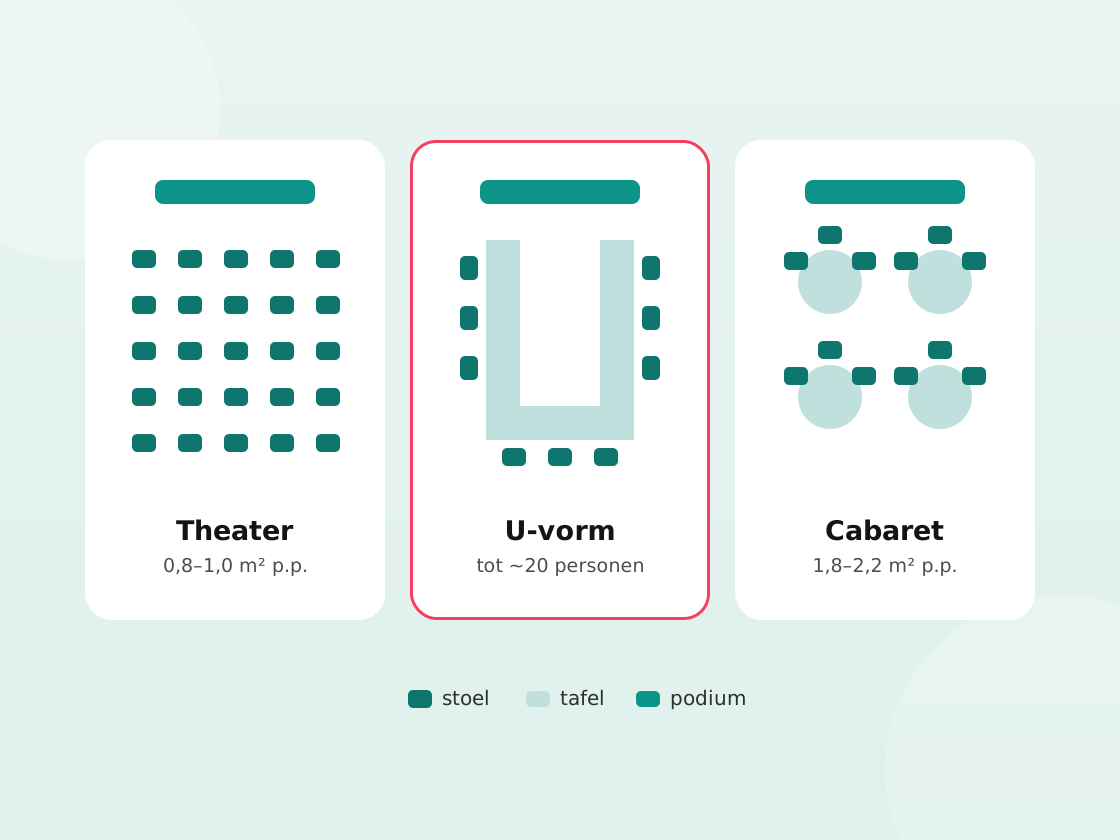
Theatre, cabaret, U-shape or boardroom — the layout governs how much talking happens. A practical overview with space per person.
From request to invoice in one platform
Try MiceBird free for fourteen days. Your offering in it, your branding around it — no implementation project.