
Why your deposit arrives late
A deposit that only lands after three reminders costs more than money. How to make it part of signing.
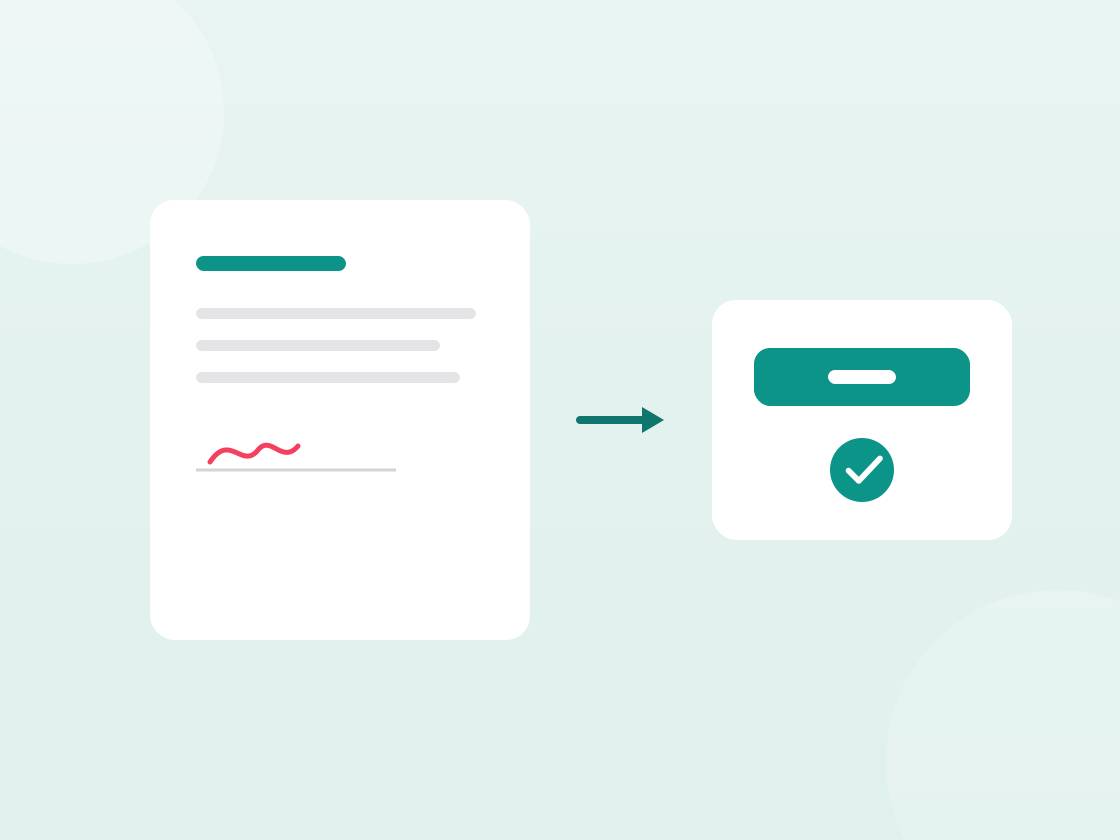
The quote is signed, the date is fixed, and the deposit invoice has gone out. Three weeks later the money still isn't there. You send a reminder, then another, and eventually you call — about an amount nobody disagrees on.
That costs time and returns nothing. And until it's paid, you have a date blocked with no certainty at all.
The problem is the order
At most venues it runs like this: sign first, invoice second, then wait. Between the moment the client enthusiastically said yes and the moment they have to pay, days pass — and in those days the subject drifts into the background.
The fix is to reverse the order: make paying part of signing rather than a step afterwards.
Paying at the moment of agreement
A payment link in the same screen where the client signs changes behaviour entirely. Not because people suddenly want to pay sooner, but because at that moment they're already dealing with arranging this event.
Three things make the difference:
One click, not a bank transfer. A link to iDEAL is thirty seconds of work. A manual transfer with IBAN and reference is a task that lands on a list.
Immediately after the signature. Not in a separate email the next day. The moment of confirming is the moment of maximum willingness.
A clear amount and what it's for. "Deposit 30% — confirms your reservation for 14 November" is more concrete than an invoice number.
Corporate clients often can't click
At larger organisations payment runs through accounts payable, and an iDEAL link doesn't help. There, something else applies: make sure the invoice is right first time.
Ask at signature for the billing address, the purchase order number and the cost centre. Those are the three things a corporate invoice stalls on, and at the moment of signing you get them without effort. Three weeks later you have to phone for them.
Pick a percentage that makes sense
Thirty percent is common, but it isn't a law of nature. What matters is that the deposit covers your actual up-front outlay: the purchasing you do before anyone walks in.
At a party with significant purchasing and hired staff that's higher than at a meeting where you mainly provide a room. Fifty percent for the first is reasonable; fifty percent for the second feels like distrust.
Explain it in one line in the quote. "The deposit covers the purchasing we do in advance" is an acceptable explanation to almost everyone, and it moves the conversation away from whether you trust the client.
Automate the reminder
If it still hasn't been paid, the first reminder shouldn't come from you but from the system. An automatic email on day seven removes the awkwardness: it isn't a personal demand, it's a process.
At most venues that resolves the majority of late deposits before anyone has to think about it. What's left is a small number of cases where something is genuinely wrong — and those are exactly the ones where a phone call is worth making.
Read on
More articles
 Invoicing
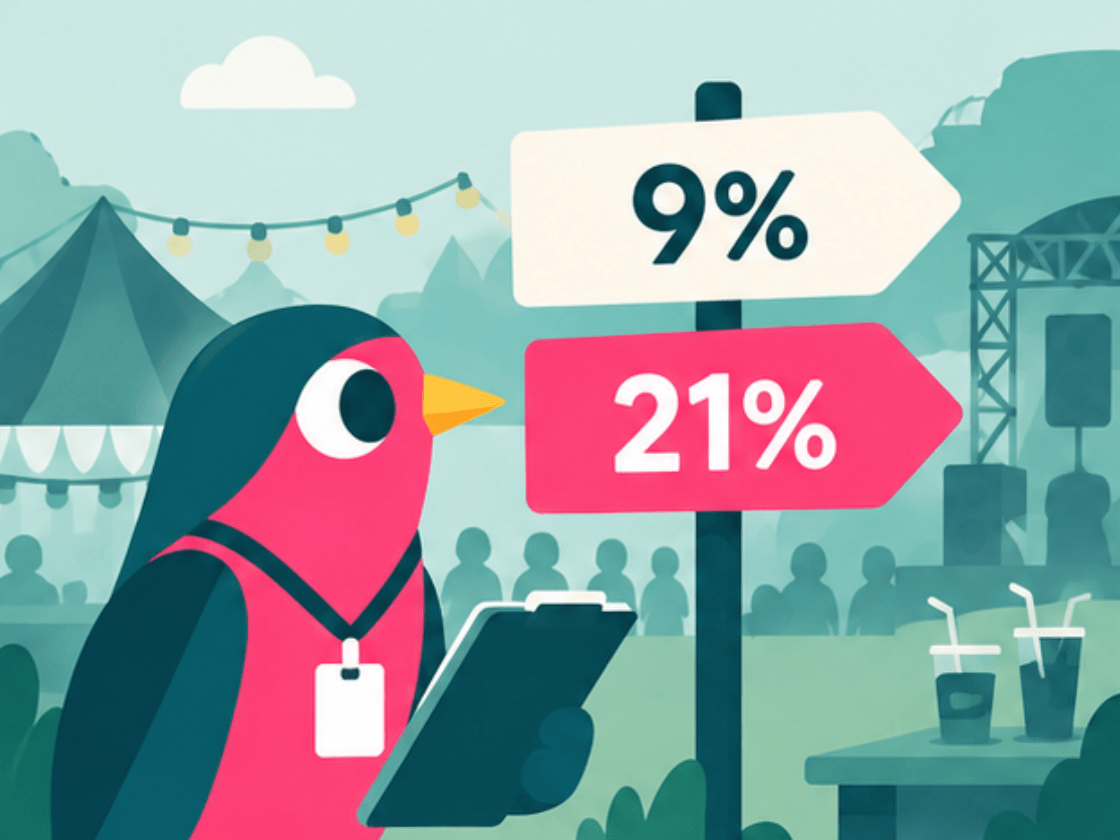
VAT on events: when 9% applies and when 21% does
Room hire, catering, admission and parking don't share a VAT rate. A practical overview for anyone drawing up quotes and invoices.
 Invoicing
Why your invoices get paid late
The average event invoice stays open for 38 days on a 14-day term. These are the causes, and none of them is that the client doesn't want to pay.
 Invoicing
Handling a cancellation without losing the client
The terms are on paper, but you still have to have the conversation. How to invoice what you're owed and keep the relationship.
From request to invoice in one platform
Try MiceBird free for fourteen days. Your offering in it, your branding around it — no implementation project.