
What to do when you're sold out
Sold out isn't an end point but a starting point. How to use a waiting list, and why you should have one regardless.
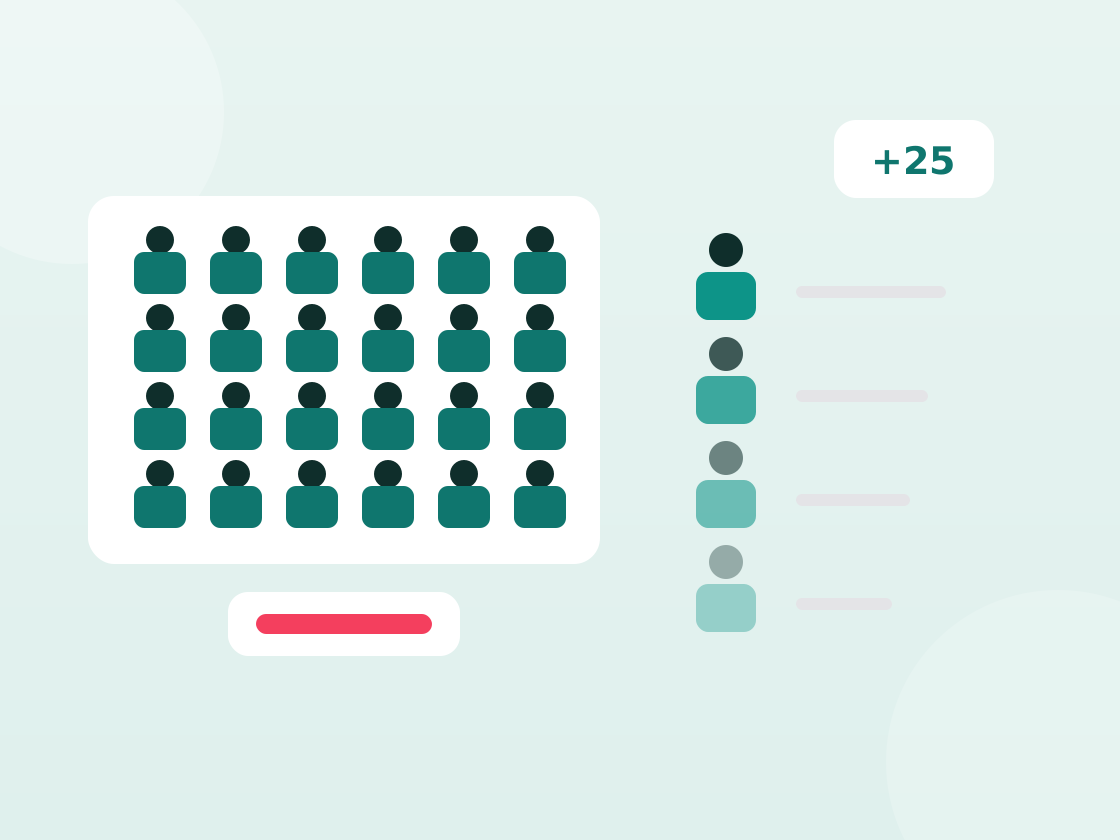
Sold out feels like the perfect outcome, and usually it is. But the days afterwards decide whether you really get the most from it — because plenty still happens after "sold out".
People cancel. People don't turn up. And tickets keep being sought by exactly the people you would have liked to have.
Always open a waiting list
A sold-out page carrying only the word "sold out" is a missed opportunity. Whoever lands there wanted to come. That's the most motivated visitor you have, and you're letting them leave with nothing.
A waiting list costs you one form field and returns three things:
You catch cancellations. Tickets come back at nearly every event. Without a list you have to put them back on the market; with one you email five people and it's resolved within the hour.
You measure real demand. Twenty-five people waiting for a two-hundred-seat room is a strong argument for a bigger room next year. Or for a second date.
You build your list for the next edition. These people wanted to come and couldn't. They're your best audience for the next announcement.
Overbooking: yes or no?
At free events overbooking is common, because no-shows there run structurally between twenty and thirty percent. At paid events it's different: people who have paid usually turn up, and turning away someone holding a valid ticket is a reputation problem you don't want.
A workable middle path: only overbook if you have somewhere to put people. An extra row of chairs, an overflow room with a screen, or standing space at the back. Then "what if they all come" is answered before it happens.
Make the waiting list a selling moment
A waiting list is a list of people who have already said yes. That's the easiest audience you'll ever have, and most organisers only use it when something happens to free up.
You can do more with it. A second session on the same day, a livestream for those who can't attend, or simply announcing the next edition to them a week before everyone else: all three cost little and reach exactly the people who already wanted in.
For events that sell out consistently, the waiting list is often the best argument for booking a bigger room next year — with numbers rather than a hunch.
Let people hand tickets back
The simplest way to get cancellations back is to make it easy. A link in the confirmation email letting someone return their ticket, optionally against a small admin fee.
Without that, something you don't want happens: people sell their ticket on privately, or simply don't come. Either way you lose the chance to refill the place, and you lose sight of who is walking in.
With a return button you get the place back, you can serve the waiting list, and you know exactly who is in the room. At a closed or corporate event, that last point isn't a detail but a requirement.
Read on
More articles
 Ticket sales
Seven reasons visitors don't finish buying their ticket
On average more than half of visitors drop out between picking a ticket and paying. These are the points where they leave, and what to do about it.
 Ticket sales
Early-bird pricing only works with a real deadline
Ticket rounds don't sell because they're cheaper, they sell because they end. How to structure them without giving away revenue.
 Ticket sales
How do you price a ticket?
Cost plus margin doesn't work for events. Four ways to arrive at a price, and why the cheapest is rarely the best.
From request to invoice in one platform
Try MiceBird free for fourteen days. Your offering in it, your branding around it — no implementation project.