
Early-bird pricing only works with a real deadline
Ticket rounds don't sell because they're cheaper, they sell because they end. How to structure them without giving away revenue.
The sales curve of almost every ticketed event has the same shape: a spike at announcement, a long flat stretch where nearly nothing happens, and a second spike in the final week.
That flat middle is what early-bird pricing exists for. It works — but not because people enjoy a discount.
It's the deadline, not the discount
A €45 ticket that becomes €55 next month doesn't sell because ten euros is a lot of money. It sells because there's a date on which the choice changes.
Without that date, waiting is always the safest option: you'll know better later whether you can go, and the price is the same anyway. That's the entire reason the middle of the curve is flat.
The practical consequence: the deadline has to be real. An early-bird rate that quietly runs on past its end date teaches your audience that your deadlines don't mean anything — and then the next one won't work either.
Structuring the rounds
Three rounds is enough for most events:
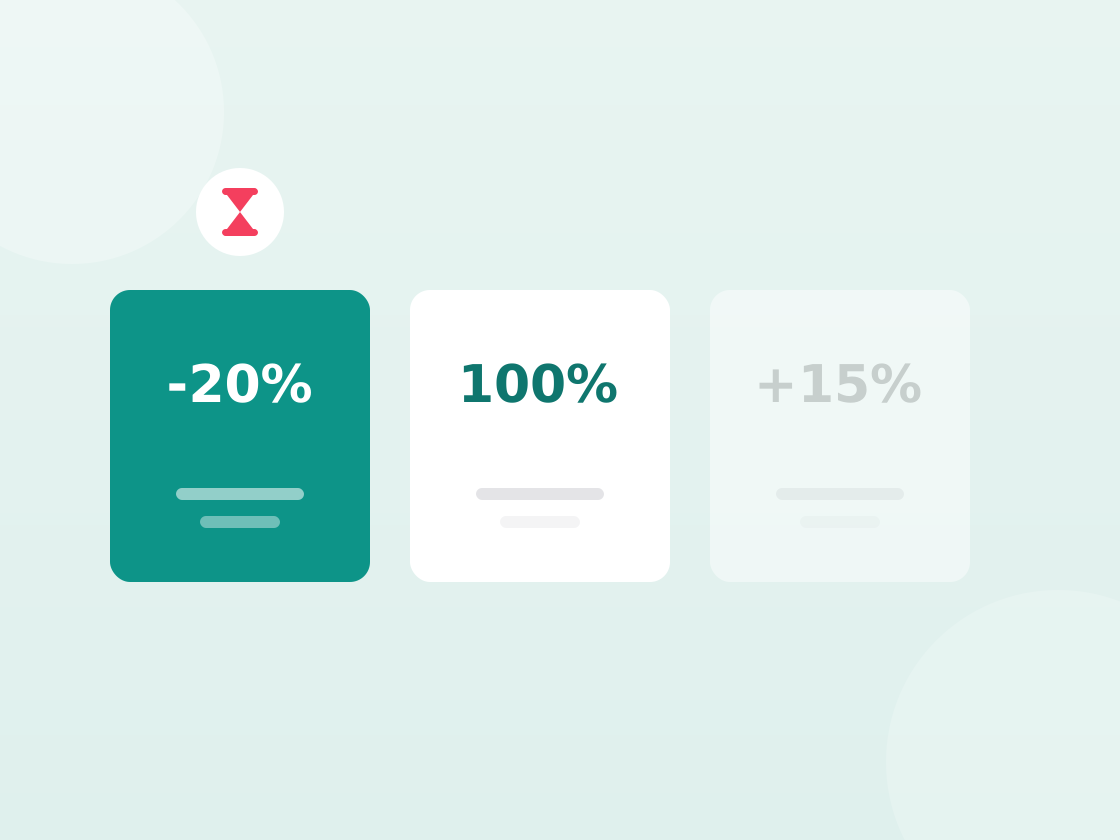
| Round | Price | When | Purpose |
|---|---|---|---|
| Early bird | 80% | Announcement to ~8 weeks ahead | Capture the first wave |
| Standard | 100% | Until ~1 week ahead | The bulk of the volume |
| Late | 110–115% | Final week | The undecided, at a margin |
That last round is the most commonly skipped. The final week is precisely when demand is highest and the buyer is least price-sensitive — they've already decided to come.
Quantity or date
You can close a round two ways: on a date ("until 1 October") or on a quantity ("the first 100"). A quantity works harder, because it visibly runs out. A date is easier to manage and feels fairer.
Both together — "the first 100, until 1 October at the latest" — is the usual combination, and stops a round that doesn't fill from running forever.
What it doesn't fix
Early-bird pricing accelerates sales that were already going to happen. It doesn't create demand that isn't there: if your first round doesn't fill, the price isn't the problem — the reason to attend is.
In that case don't cut the price, publish the programme. People who know the speakers or the menu buy a ticket; people who don't won't buy a discount either.
Read on
More articles
 Ticket sales
Seven reasons visitors don't finish buying their ticket
On average more than half of visitors drop out between picking a ticket and paying. These are the points where they leave, and what to do about it.
 Ticket sales
How do you price a ticket?
Cost plus margin doesn't work for events. Four ways to arrive at a price, and why the cheapest is rarely the best.
 Ticket sales
What to do when you're sold out
Sold out isn't an end point but a starting point. How to use a waiting list, and why you should have one regardless.
From request to invoice in one platform
Try MiceBird free for fourteen days. Your offering in it, your branding around it — no implementation project.