
Following up without becoming a nuisance
Most quotes are never followed up, and that's where most of the revenue is left behind. A rhythm that works without nagging.
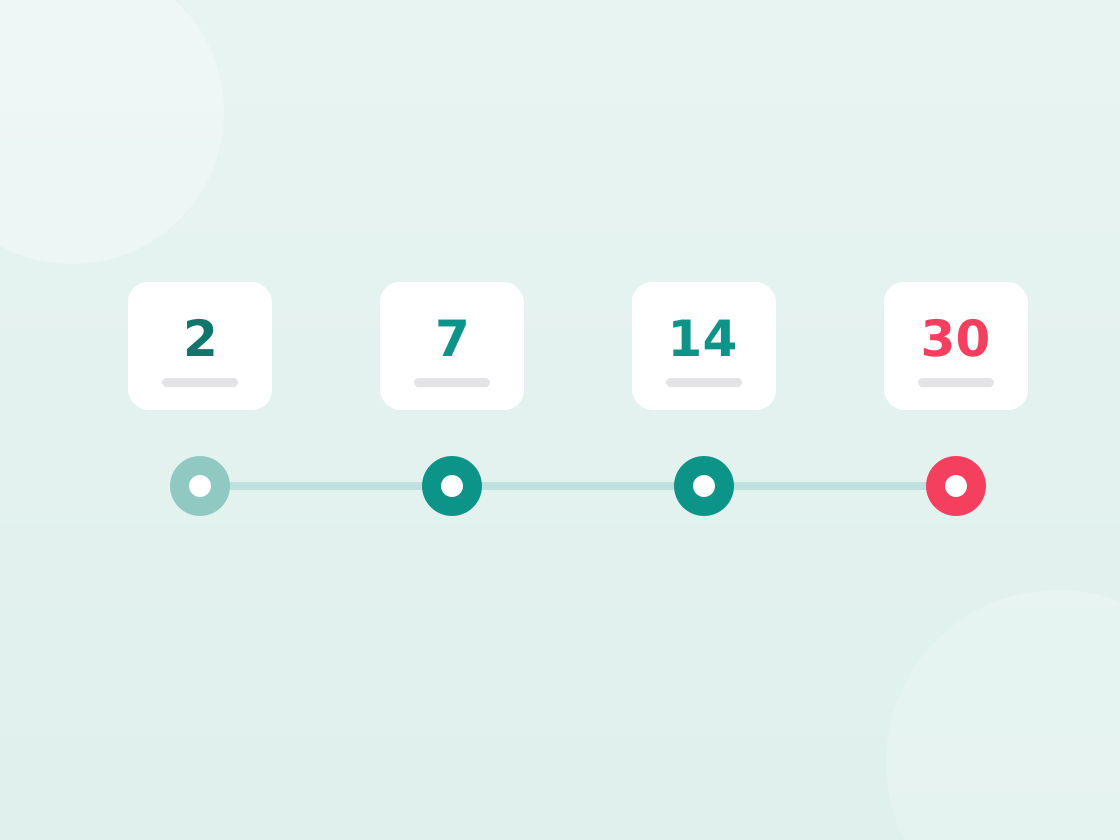
You send a quote. Nothing comes back. After two weeks you conclude it isn't happening and move on to the next enquiry.
In most cases that conclusion is wrong. Silence after a quote rarely means no. It usually means the decision-maker was on holiday, the budget wasn't signed off, two other quotes are on the table, or — most often — somebody simply forgot among a hundred other things.
Why nobody follows up
Almost everyone knows following up works. It still doesn't happen, and the reason is nearly always the same: it feels like pushing. You've told your story, named your price, and chasing it feels like you need the work.
That feeling is understandable and it's wrong. From the recipient's side, a reminder is usually a service. They know they still have to decide, they haven't had time, and your email puts it back on their list.
A rhythm that works
| Moment | What you do | Tone |
|---|---|---|
| Day 2 | Short check that the quote arrived | Service |
| Day 7 | Call, don't email | Ask whether anything is missing |
| Day 14 | Email with one new piece of information | Add value |
| Day 30 | Close it: "shall I release the option?" | Clarity |
That last one is the most powerful of the four, and the one most people daren't send. It works because it asks for nothing: you're announcing that you're releasing the date. Anyone who still wanted it speaks up now. Anyone who doesn't reply was never a client — and you have your calendar back.
Give a reason every time
An email that only says "just checking whether you've decided" puts the burden on the other person. Give them something instead:
- the date is held until next week
- a comparable group just booked the same package, here's what stood out for them
- the seasonal menu has changed, here's the new version
- there's a second enquiry for the same date
That last one is powerful when it's true, and it's the strongest reason there is. Never invent it. Being caught once on a fabricated second enquiry costs more than the booking was worth.
What to do with a no
A clear no is worth more than silence, and yet it's rarely used. Ask one follow-up question: was it the price, the date, the venue, or did it fall through internally?
The answer costs them ten seconds and gives you the only real market research you have. Three instances of "too expensive for what we wanted" means something different from three instances of "the date had gone".
Close with an offer that applies no pressure: may you approach them again next year for the same period? Some will say yes, and that's an enquiry you get next year without advertising for it.
Record it, or it won't happen
Follow-up rarely fails on intention and almost always on admin. After three weeks nobody remembers which quote went out when, or who has already been called.
So the moment a quote goes out, put the next step in your system with a date. Not in your head and not on a sticky note: in the place you get your work from each morning. A quote with no scheduled follow-up is a quote you've already half given up on.
Read on
More articles
 Quotes
The anatomy of a quote that actually gets signed
Two quotes with the same price and the same room rarely get the same answer. Here's what's in the one that wins.
 Quotes
Agreeing deposits and cancellation terms without friction
A cancellation two weeks out costs you the room, the staff and the stock. Here's how to arrange that up front without sounding distrustful.
 Quotes
Raising your prices without losing clients
Most venues raise too late and then too much at once. How to approach it, and what to say to existing clients.
From request to invoice in one platform
Try MiceBird free for fourteen days. Your offering in it, your branding around it — no implementation project.