
The anatomy of a quote that actually gets signed
Two quotes with the same price and the same room rarely get the same answer. Here's what's in the one that wins.
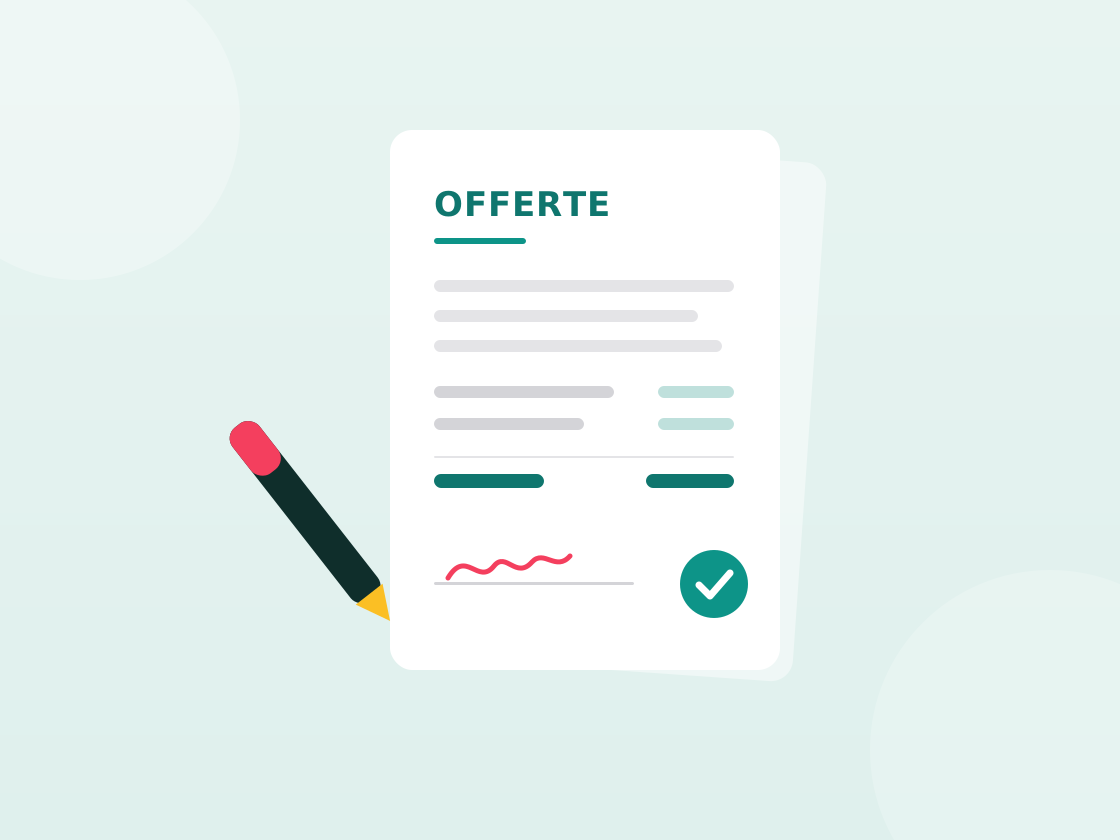
Anyone who writes quotes regularly knows the pattern: two near-identical proposals, two completely different responses. Same room, same price, different outcome.
The difference is almost never the amount. It's how much work the recipient still has to do before they can say yes.
The person who asked isn't the person who decides
This is the assumption that undermines most quotes. You write to the person who emailed, but that person has to defend your proposal internally to a manager, a board or a committee who has never seen your venue and wasn't part of the conversation.
Everything you only agreed verbally disappears at that moment. So write the quote for someone who wasn't there.
What's in the one that wins
A three-line summary at the top. What, when, how many people, what it costs. Whoever forwards your proposal will paste those lines into the covering email.
The price broken down, not a single total. One figure of €8,400 invites negotiation on the whole. The same €8,400 split across room hire, per-person package and technical services shows where the money goes — and what drops out if the budget is tight.
One clear option, two at most. Three options with three choices each move your work onto the client. Make a recommendation and list the alternatives underneath.
The terms where they belong. Deposit, cancellation window and final numbers go in the quote, not in an attachment. A surprise afterwards costs more goodwill than it would ever have cost up front.
A validity date. Not as pressure, but because a quote without one sits indefinitely. "Valid until 1 October" gives a reason to decide this week.
Signing has to be one click
A quote that must be printed, signed, scanned and emailed back sits for another two days on average — often with someone who isn't in the office that week. A quote that opens in the browser and is signed there is frequently approved the same afternoon.
That isn't a detail of the paperwork. It's the difference between a yes that happens now and a yes that still has to pass someone's printer.
Read on
More articles
 Quotes
Agreeing deposits and cancellation terms without friction
A cancellation two weeks out costs you the room, the staff and the stock. Here's how to arrange that up front without sounding distrustful.
 Quotes
Raising your prices without losing clients
Most venues raise too late and then too much at once. How to approach it, and what to say to existing clients.
 Quotes
Following up without becoming a nuisance
Most quotes are never followed up, and that's where most of the revenue is left behind. A rhythm that works without nagging.
From request to invoice in one platform
Try MiceBird free for fourteen days. Your offering in it, your branding around it — no implementation project.