
Agreeing deposits and cancellation terms without friction
A cancellation two weeks out costs you the room, the staff and the stock. Here's how to arrange that up front without sounding distrustful.
A company party for eighty people is cancelled eleven days ahead. The room was blocked, the staff rostered, the drinks ordered. The client is very sorry and assumes nothing will be charged.
Whether that conversation turns painful was already settled — back when you sent the quote.
Why it's often missing
Almost everyone who sells events knows the hesitation: terms about deposits and cancellation feel like you're anticipating trouble, at exactly the moment you're trying to win someone over.
But the client doesn't read it that way. To them a sliding scale is information, like the price. What does create distrust is a condition that only surfaces once something has gone wrong.
A scale that's reasonable
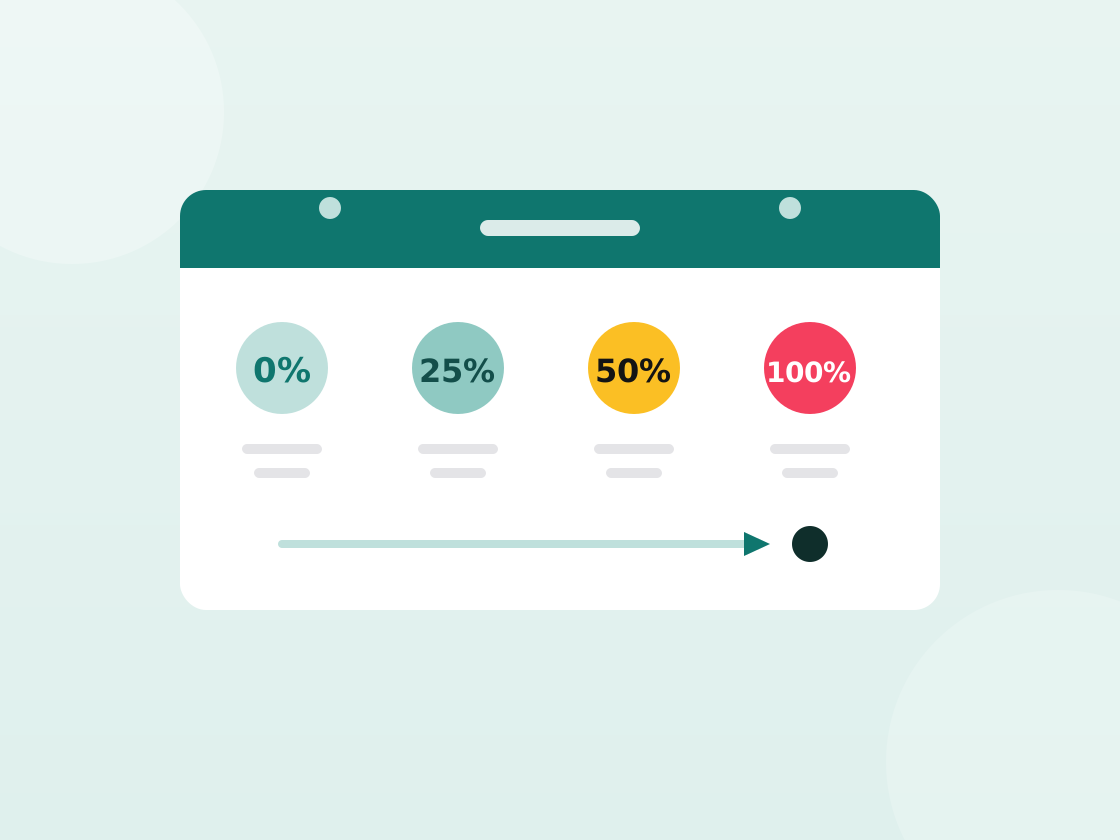
| Cancellation | Percentage | The thinking |
|---|---|---|
| More than 3 months ahead | 0% | Ample time to resell |
| 1–3 months ahead | 25% | Your date was blocked |
| 2–4 weeks ahead | 50% | Staff rostered, stock partly bought |
| Less than 2 weeks | 75–100% | Barely fillable |
These proportions are standard in the industry and are rarely disputed — provided they were in the quote somebody signed.
The deposit does most of the work
A deposit of 25 to 50 percent on signature does three things at once: it covers your purchasing, it confirms the booking is real, and it makes a later cancellation discussable without having to invoice for nothing.
There's a second reason, mentioned less often. A date that's been paid for is rarely "forgotten" — whereas an option without a deposit can sit in your calendar for weeks for an event the client called off long ago.
Final numbers belong in there too
The third agreement that's often missing: until when can the headcount drop? Without that date you get a correction from eighty to sixty two days ahead, with the stock already in.
The convention: final numbers at least five working days ahead, and downward adjustment of at most ten percent. Upward is always fine, as long as the room can take it.
Read on
More articles
 Quotes
The anatomy of a quote that actually gets signed
Two quotes with the same price and the same room rarely get the same answer. Here's what's in the one that wins.
 Quotes
Raising your prices without losing clients
Most venues raise too late and then too much at once. How to approach it, and what to say to existing clients.
 Quotes
Following up without becoming a nuisance
Most quotes are never followed up, and that's where most of the revenue is left behind. A rhythm that works without nagging.
From request to invoice in one platform
Try MiceBird free for fourteen days. Your offering in it, your branding around it — no implementation project.